WSA 2% Organic Growth: Signia, Widex Outlook 2026/27
WS Audiology grew 2% organically and lifted its margin to 18.7% in 2025/26, but losing a big U.S. managed care contract weighs on next year's outlook.

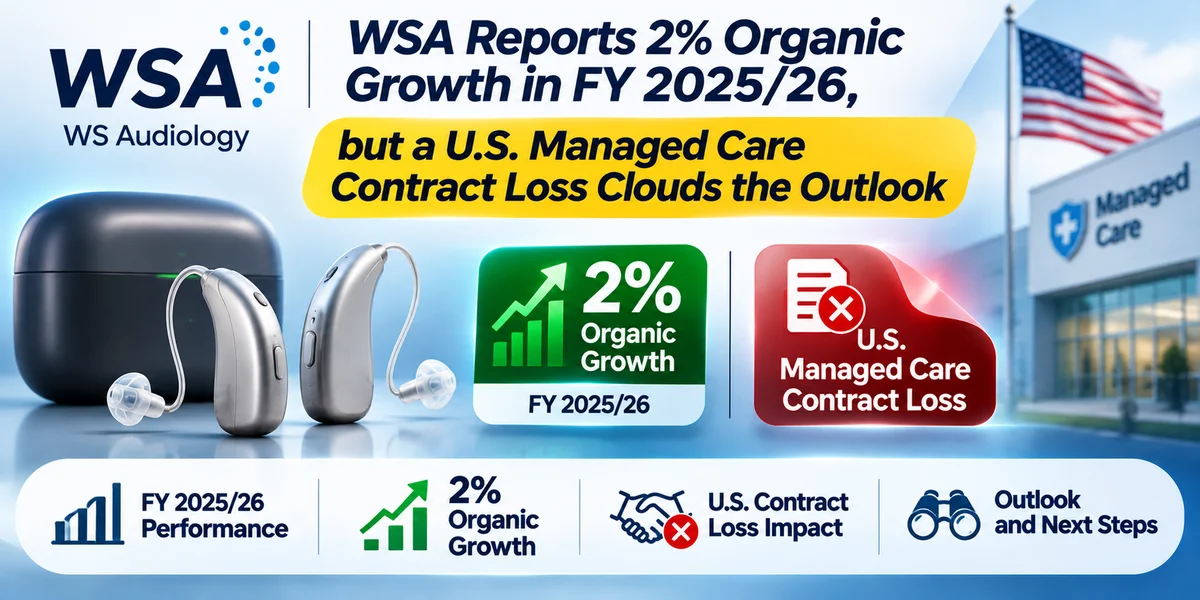
- WS Audiology (WSA) posted 2% organic revenue growth for the fiscal year ended September 30, 2026.
- Full-year revenue was €2.54 billion, down 2% as reported because of weaker currencies.
- EBITDA before special items rose to €473 million, lifting the margin from 17.7% to 18.7%.
- Consumer-facing businesses grew 7% organically, while wholesale fell 3%.
- The July to September quarter was stronger, with 4% organic growth and all three regions growing.
- A large U.S. managed care contract expires on January 1 and is expected to cut group revenue growth by about five percentage points next year.
WSA Reports 2% Organic Growth in FY 2025/26, but a U.S. Managed Care Contract Loss Clouds the Outlook
WS Audiology, the group behind Signia, Widex and Rexton hearing aids, has closed its 2025/26 financial year with modest growth and better profitability. The company reported 2% organic revenue growth for the year ended September 30, 2026. It also said it met its own sales and profit guidance. The good news is tempered by an expected hit from the loss of a major U.S. managed care contract. Here is what the results mean for the hearing aid industry and for people who wear or plan to buy these devices.
WSA's Full-Year Financial Results
WSA's full-year revenue came in at €2.54 billion, roughly US$2.78 billion. Reported revenue fell 2%, but that figure hides the underlying picture. A weaker U.S. dollar and Japanese yen reduced reported growth by about four percentage points. Measured on an organic basis, which strips out currency effects, the business grew 2%.
Profitability improved. Earnings before interest, taxes, depreciation and amortization (EBITDA), excluding special items, rose to €473 million from €456 million the year before. That moved the margin from 17.7% to 18.7%. Net profit climbed to €19 million from €4 million, helped by higher earnings and lower net interest expense.
Consumer Businesses Drive Growth, Wholesale Slips
The split between business areas tells the real story. WSA's consumer-facing operations, which include managed care, retail and online sales, grew 7% organically over the year. Wholesale revenue, where hearing aids are sold to independent clinics and other partners, declined 3%. The company linked part of that weakness to the timing of its product launches compared with competitors.
By region, the Americas generated about half of group revenue and grew 3% organically. Asia-Pacific and the combined Europe, Middle East and Africa region were flat for the full year.
A Stronger Finish to the Year
The final quarter, July to September, was the best of the year. Group revenue reached €654 million, up 4% organically and 5% as reported. Consumer-facing sales rose 8% organically, and wholesale was flat, a clear improvement on the full-year trend. All three regions returned to growth, led by the Americas at 5%, followed by Europe, the Middle East and Africa at 3%, and Asia-Pacific at 1%.
WSA credits the launch of the Signia MaX hearing aid for helping sales pick up late in the year. The platform uses four deep neural networks to process speech, background noise, the listening environment and the wearer's own voice. The company also pointed to the Widex Allure AI RIC, which offers an on-demand Clarity Boost feature meant to make conversations easier to follow in noisy places. Allure AI only became available in the U.S. this month. WSA expects both platforms, along with new hearing aid styles, to support sales in 2026/27.
Why the U.S. Managed Care Contract Matters
The biggest cloud over the outlook is the non-renewal of a large U.S. managed care contract, which expires on January 1. WSA estimates the loss will reduce group revenue growth by about five percentage points and the margin by roughly three points in the coming year.
As a result, the company expects organic revenue growth between -2% and +2% in 2026/27, with the EBITDA margin before special items falling about two percentage points. Without the contract impact, WSA says it would expect revenue growth in line with or above the market and continued margin improvement. It also projects global hearing aid unit sales to grow 3% to 4%.
Managed care contracts matter because they channel large volumes of patients to specific hearing aid suppliers through insurers and benefit programs. Losing one can shift sales quickly, which is why the company flagged it so clearly in its guidance.
Cybersecurity Incident
The annual report also covered a late-October cybersecurity incident that temporarily disrupted some Widex apps. WSA said it happened after the financial year closed, expects the financial impact to be limited, and does not expect it to change its guidance.
How WSA Compares With Other Hearing Aid Makers
WSA's 4% organic growth in the latest quarter arrived as several competitors also reported gains over the same three months. Demant reported 17% organic growth in hearing aid sales to external customers. GN Hearing posted 5% organic growth, and hearing care retailer Amplifon reported 3.6%. Sonova, which makes Phonak and Unitron, reported 7.5% group sales growth and 11% wholesale hearing instrument growth at constant exchange rates for the six months ended September 30.
These numbers are not directly comparable. Companies report different periods and have different mixes of wholesale hearing aids, retail hearing care and other businesses. Still, the overall picture is a hearing aid market that continues to grow.
What It Means for Hearing Aid Buyers
For people shopping for hearing aids, these results are mostly a signal of where innovation is heading. Artificial intelligence, deep neural network processing and features that help in noisy settings are now central to new product launches from major brands. If you are considering Signia, Widex or Rexton devices, the best step is still a professional hearing test and a trial with a qualified audiologist, who can match the technology to your hearing loss, lifestyle and budget.
The Year Ahead
The next twelve months will show how much the new Signia and Widex platforms can contribute while WSA absorbs the loss of a large U.S. contract. Strong consumer-facing growth and improving margins give the company a solid base, but the near-term guidance reflects real pressure.
FAQs
1. How much did WSA grow in 2025/26?
WSA reported 2% organic revenue growth for the fiscal year ended September 30, 2026. Reported revenue fell 2% to €2.54 billion because of currency effects.
2. Which brands does WS Audiology own?
WSA is the parent group of Signia, Widex and Rexton hearing aids. It also operates hearing care businesses such as HearUSA, Hear.com and TruHearing.
3. Why is WSA's outlook weaker for 2026/27?
A large U.S. managed care contract expires on January 1. WSA expects it to cut group revenue growth by about five percentage points and the margin by about three points.
4. What is WSA's guidance for next year?
The company expects organic revenue growth of -2% to +2% and an EBITDA margin about two percentage points lower, before special items.
5. Which products helped WSA's sales recently?
WSA credits the Signia MaX launch for the sales pickup late in the year. It also highlights the Widex Allure AI RIC, which has an on-demand Clarity Boost feature.
6. Does this news affect people who already own Signia or Widex hearing aids?
No. The results concern the company's finances and a business contract. Existing devices and warranties are not affected.
More from this section

Web Stories
More stories › Siemens Hearing Aid Guide 2026: Features, Prices, Benefits
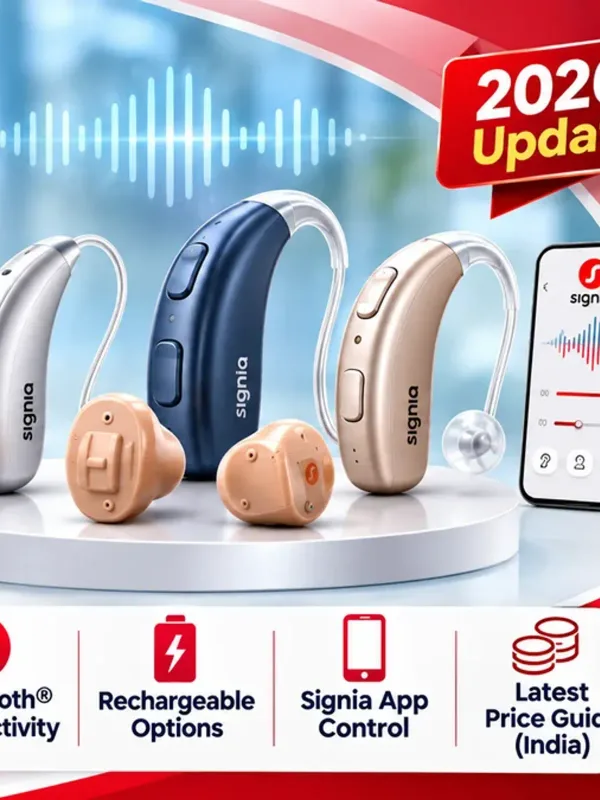 Signia Hearing Aid Latest Update 2026: New MaX AI Hearing Aid, Features and Prices
 कानात दडे बसणे: कारणे, लक्षणे आणि उपचार
 Flysound Comfort Pro: OTC AI hearing aid with remote mic
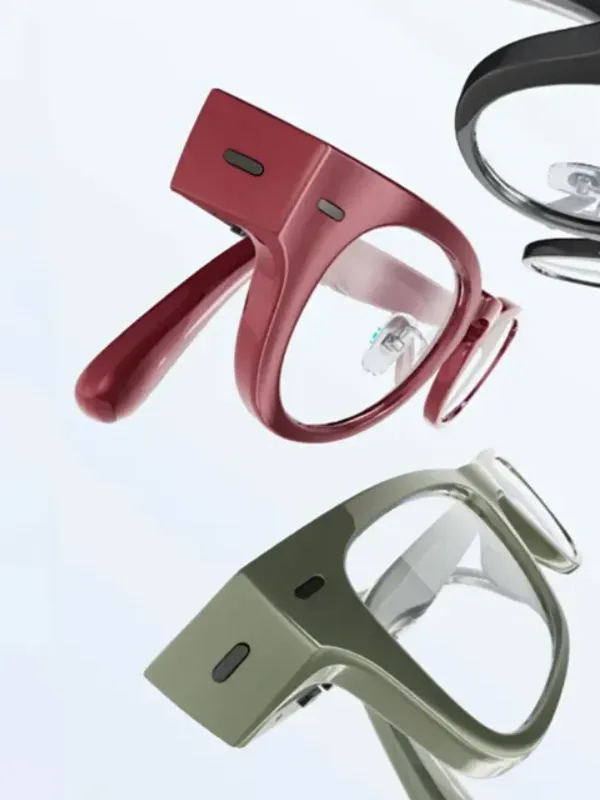 Nuance Audio Plus: New Hearing Glasses Explained
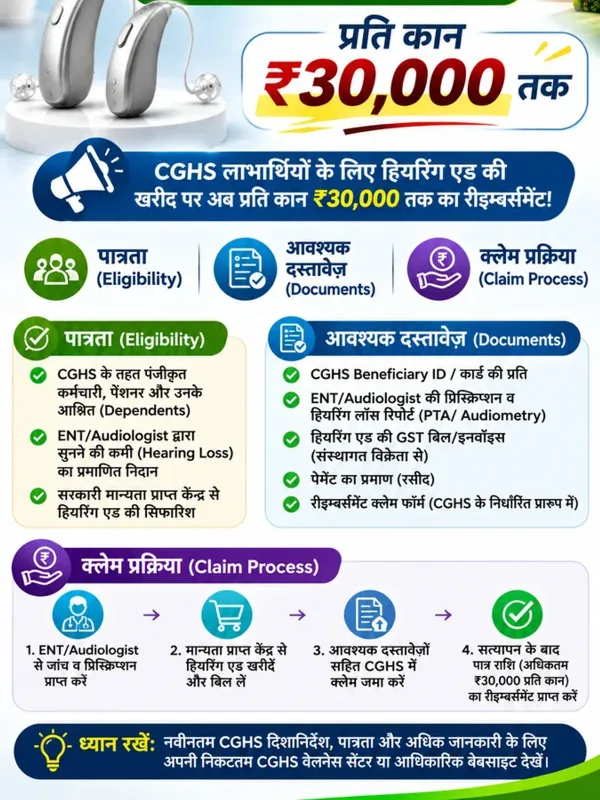 CGHS हियरिंग एड रीइम्बर्समेंट 2026: प्रति कान ₹30,000 तक, पात्रता, दस्तावेज़ और क्लेम प्रक्रिया
 Oticon Hearing Aids Discontinued in India: Full List 2026
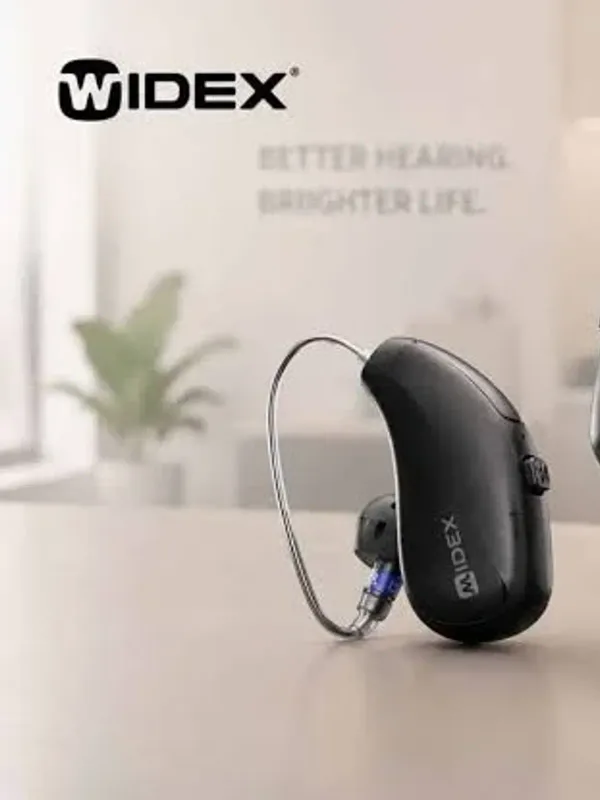 Widex Allure AI RIC Explained: What On-Demand AI Hearing Aids Mean for Buyers in India
 आजी-आजोबांसाठी कोणती आरोग्य मशीन? मार्गदर्शन
 ब्रेकिंग न्यूज: श्रवणयंत्रावर 50% सूट | व्हिआर स्पीच अँड हिअरिंग क्लिनिक, अहिल्यानगर
Reader Comments
Comments are reviewed by our desk before they appear. Sign in with your mobile number to join the discussion.