Amplifon Miracle-Ear Data Breach: What Happened & What to Do
Hearing care giant Amplifon confirms a Miracle-Ear data breach from Jan–Feb 2026. Learn what data was exposed, who is affected and how to stay safe.

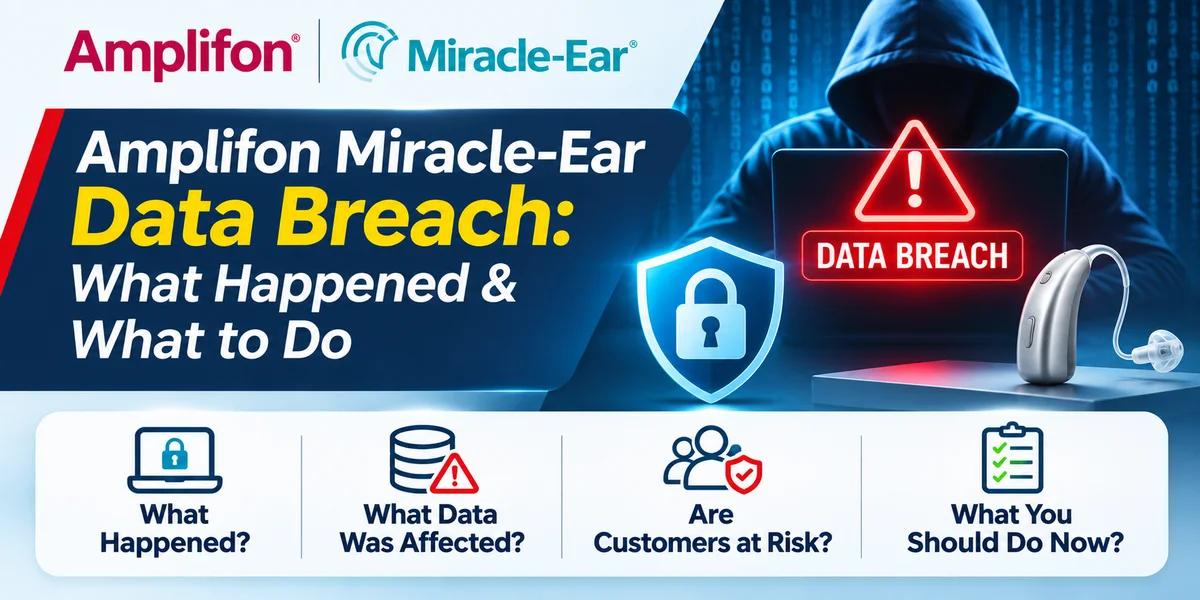
- Amplifon, the hearing care company that runs the Miracle-Ear clinic network, says an unauthorized party copied files from its systems between January 18 and February 8, 2026.
- The company noticed suspicious activity on February 11, 2026.
- A review completed on October 6, 2026 confirmed that personal information may have been in the stolen files.
- Exposed data may include names, contact details, dates of birth, government ID numbers, hearing and medical details, and health insurance information.
- A limited number of people may also have had their Social Security number or financial information exposed.
- Amplifon says it has found no evidence that the data has been misused.
Amplifon Miracle-Ear Data Breach: What Happened & What to Do
Hearing aid users in the United States are being warned about a data security incident at Amplifon, the global hearing care company behind the Miracle-Ear brand. The company has begun notifying people that their personal and health-related information may have been exposed.
What Happened
Amplifon Americas says it spotted unusual activity on parts of its network on February 11, 2026. It brought in outside cybersecurity specialists, informed law enforcement, shut down the affected accounts, contained the incident, and tightened its monitoring.
The investigation showed that an unauthorized party had copied files from certain systems over roughly three weeks, from January 18 to February 8, 2026. It took until October 6, 2026 for the company to complete its review of those files and confirm that personal information was involved. The same notice appears on both the Amplifon and Miracle-Ear websites.
What Information Was Exposed
Based on Amplifon's notice, the files may have contained:
Full names and contact details
Dates of birth
Driver's license numbers or other state ID numbers
Other government-issued ID numbers
Hearing or medical information
Medical record numbers and dates of service
Other health information
Health insurance ID numbers and related insurance details
For a limited number of people, Social Security numbers or financial information may also have been involved. Each letter states whether a recipient's Social Security number or financial data was affected. Amplifon says it knows of no fraudulent use of the information so far.
Who May Be Affected
The notification letters come in two versions. One goes to customers whose data came from dealings with Amplifon or its franchise locations. The other goes to members of health plans that work with Amplifon to deliver hearing benefits. This means that you may receive a letter even if you never visited a Miracle-Ear clinic. Amplifon's parent company reported that the Miracle-Ear direct retail network had grown to 450 clinics by the third quarter of 2026.
How Many People Were Affected
Amplifon has not announced an overall figure. Filings with state authorities show:
Texas: 85,804 residents
Massachusetts: 19,276 residents
Washington: 8,491 residents
Vermont: 1,027 residents
Together, these filings total 114,598 people. Amplifon also made a filing in California, which generally indicates that more than 500 Californians were affected. Technology news outlets SecurityWeek and The Record have reported a nationwide figure of around 1.3 million, but Amplifon has not confirmed this number.
What Amplifon Is Doing
The company is offering 24 months of free credit monitoring and identity protection to certain people, including those whose Social Security number or financial details were involved. The services are provided by Kroll and cover single-bureau credit monitoring, fraud consultation, and identity theft restoration. Every letter carries its own activation code and enrollment deadline. Amplifon says it will mail notices to everyone for whom it has a valid address.
The timeline has drawn attention. The first state filings came nearly nine months after the suspicious activity was detected, and about a month after the October review concluded.
How to Protect Yourself
Because health records, insurance IDs, and government ID numbers were involved, the main risks are medical identity theft and identity fraud. These steps can help:
Read your letter carefully. Check whether it includes the Kroll offer and enroll before the deadline.
Review your insurance statements. Compare every explanation of benefits with the hearing services you actually received, and report hearing aids, tests, or visits you don't recognize.
Freeze your credit if your letter mentions your Social Security number or financial data. A freeze is free at Equifax, Experian, and TransUnion and blocks new credit accounts in your name.
Watch for misuse of your ID. Unexpected mail about accounts or loans you never opened can be an early warning.
Be careful with unexpected messages. Scammers often exploit news of a breach. Verify any call, text, or email that mentions Amplifon or Miracle-Ear before you reply or click anything.
This is general information and not legal advice. The right steps depend on what your own letter says.
A Lesson for Every Hearing Aid User
Hearing aid fittings and audiology records are sensitive health data. Before choosing a clinic or provider, ask how they store your records, who has access to them, and how they would notify you if something went wrong. Keep copies of your purchase and warranty papers, and check your insurance statements regularly, whichever brand you use.
FAQs
When did the Amplifon data breach happen?
Amplifon says files were copied between January 18 and February 8, 2026. The company detected the activity on February 11, confirmed that personal data was involved on October 6, and began state filings in early November 2026.
Is this the same as the Miracle-Ear data breach?
Yes. Miracle-Ear is part of Amplifon's business, and the same notice appears on the Miracle-Ear website. Your letter may come from Amplifon rather than from Miracle-Ear.
What information was exposed in the Amplifon breach?
The files may include names, contact details, dates of birth, driver's license and other government ID numbers, hearing or medical information, medical record numbers, service dates, and health insurance details. A limited number of people may also have had their Social Security number or financial information exposed.
How many people were affected?
Amplifon has not released an official total. State filings count 114,598 people across Texas, Massachusetts, Washington, and Vermont. Some news reports mention about 1.3 million people nationwide, but the company has not confirmed that figure.
Why did I get a letter if I've never visited Miracle-Ear?
Amplifon also works with health insurance plans to provide hearing benefits. If your plan used Amplifon for that purpose, you may receive a letter written for plan members.
Is Amplifon offering free credit monitoring?
For certain people, yes. The company is offering 24 months of Kroll credit monitoring and identity protection, including to those whose Social Security number or financial information was involved. Your letter will say whether you qualify and how to activate the service.
Has the stolen data been misused?
Amplifon says it is not aware of any fraudulent use of the information. You should still monitor your accounts and insurance statements closely.
What should I do if I received a breach letter?
Read it carefully, activate any monitoring offer before the deadline, check your insurance statements, consider a credit freeze if your Social Security number or financial data was involved, and ignore unexpected calls, texts, or emails about the breach.
Does this affect hearing aid users in India?
The notices relate to Amplifon's U.S. operations and the people who received letters. If you are in India, there is no indication in the notice that you are affected. It is still wise to ask your own hearing clinic how it protects your data.
More from this section

Web Stories
More stories › कानात दडे बसणे: कारणे, लक्षणे आणि उपचार
 Flysound Comfort Pro: OTC AI hearing aid with remote mic
 Nuance Audio Plus: New Hearing Glasses Explained
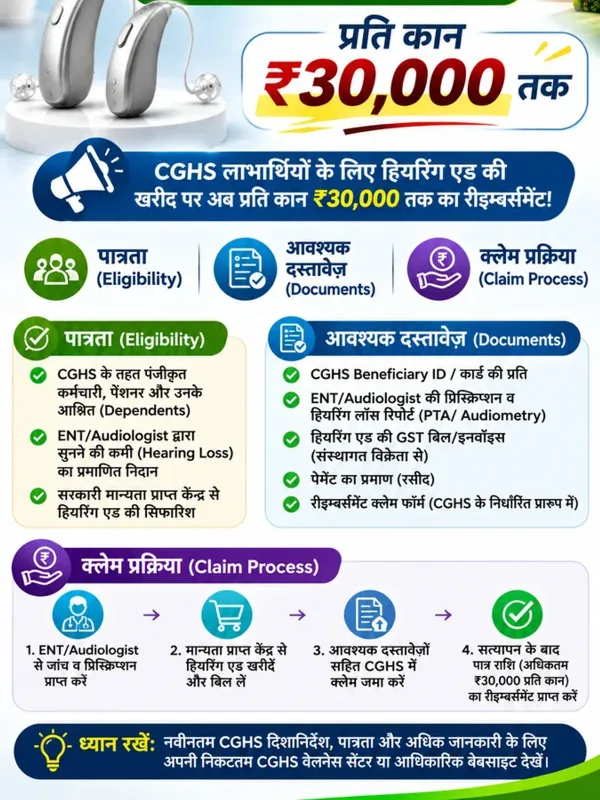 CGHS हियरिंग एड रीइम्बर्समेंट 2026: प्रति कान ₹30,000 तक, पात्रता, दस्तावेज़ और क्लेम प्रक्रिया
 Widex Allure AI RIC Explained: What On-Demand AI Hearing Aids Mean for Buyers in India
 आजी-आजोबांसाठी कोणती आरोग्य मशीन? मार्गदर्शन
 ब्रेकिंग न्यूज: श्रवणयंत्रावर 50% सूट | व्हिआर स्पीच अँड हिअरिंग क्लिनिक, अहिल्यानगर
 Hearing Aids November 2026: Latest Updates & Price Guide
 Oticon Hearing Aids Discontinued in India: Full List 2026
 Siemens Hearing Aid Guide 2026: Features, Prices, Benefits
Reader Comments
Comments are reviewed by our desk before they appear. Sign in with your mobile number to join the discussion.