Signia Pure Charge&Go MaX Review India 2026: Honest Verdict
Signia Pure Charge&Go MaX review for India: 54x faster chip, four AI networks and 30-hour battery. See what is real, what is hype, and who should buy.
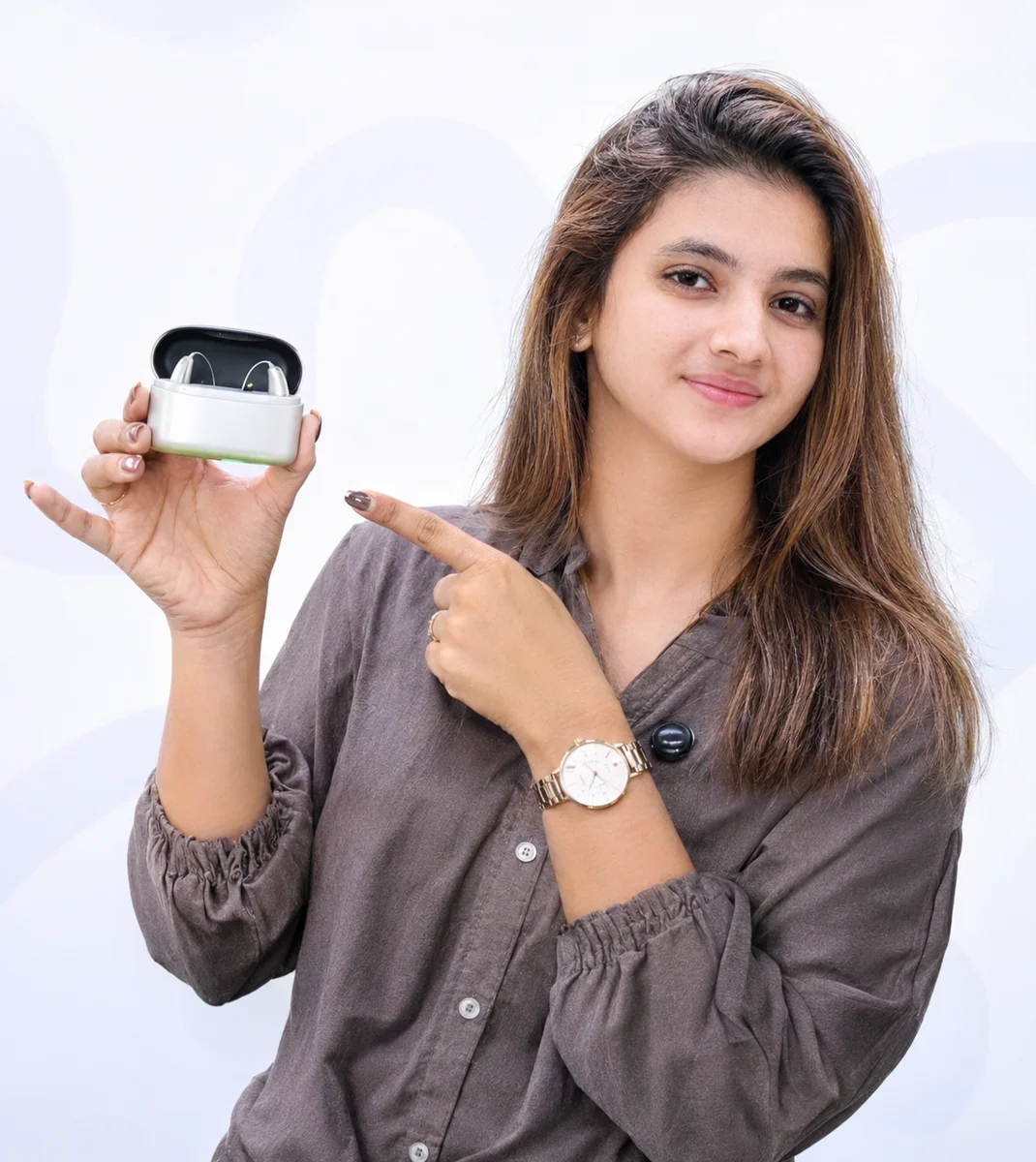
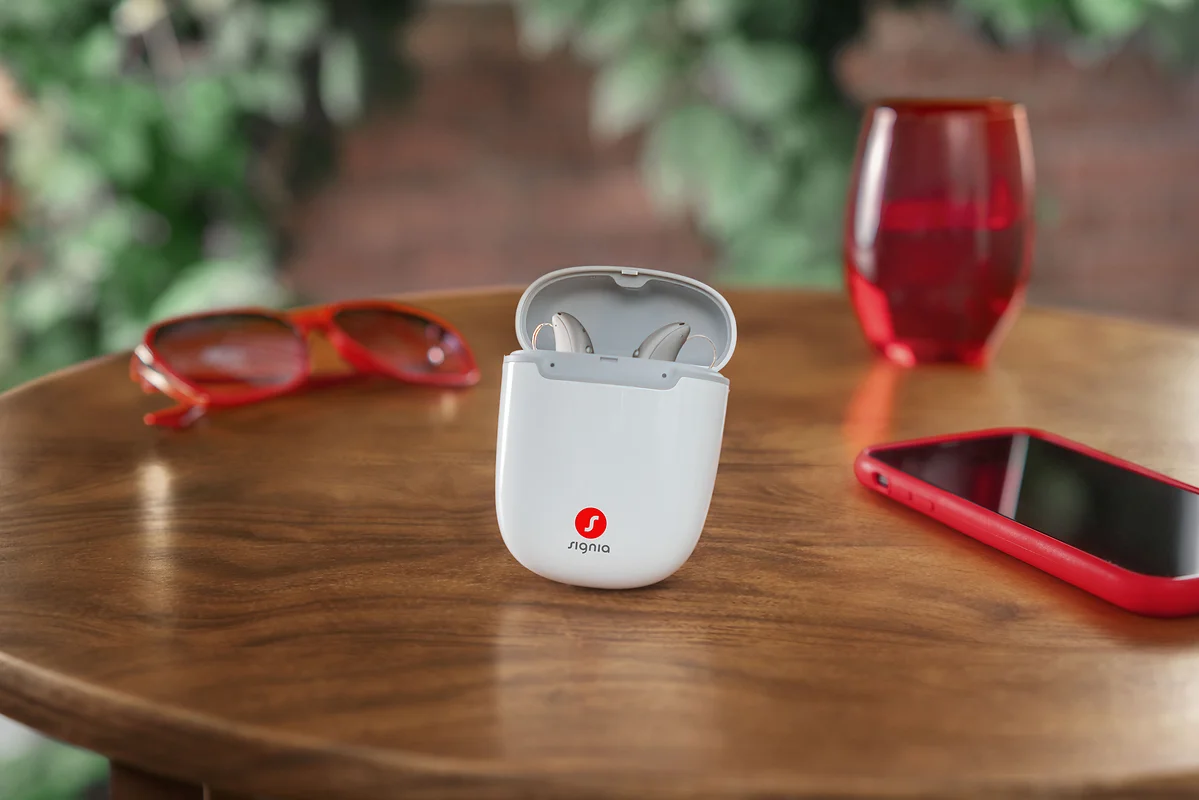
The Signia Pure Charge&Go MaX is a real step forward wrapped in a headline that oversells it. The chip, the calibration-free own-voice processing and the all-in-one connectivity are genuine. “Four AI brains” is a slogan. Buy it for how it helps you hear, not for how many networks it contains, and insist on a trial in your own noisy world first. To find out which hearing aid suits your hearing and budget, book a hearing test with the audiologists at VR Speech and Hearing Clinic.
- Chip has 54x more processing power than Signia IX
- 50% better energy efficiency than the previous platform
- Double the memory of the previous platform
- Up to 30 hours of battery life
- Portable charger holds four full charges
- “Four AI brains” is mostly marketing, not a measure of hearing benefit
- “World’s first” claim is worded very narrowly
- Auracast is not fully active until a firmware update by March 2027
- Auracast needs venues with transmitters, and India has very few
- Most performance figures come from Signia’s own studies
Signia Pure Charge&Go MaX Review India: Is the Four-AI-Brain Hearing Aid Worth It?
Signia has launched its newest flagship, the Pure Charge&Go MaX, with bold claims: four deep neural networks, a chip said to be 54 times more powerful than before, and up to 30 hours of battery life. If you are searching for a Signia Pure Charge&Go MaX review in India, the real question is how much of this is genuine progress and how much is marketing. At VR Speech and Hearing Clinic, we went through the launch details and independent coverage to separate the two.
What Is the Signia Pure Charge&Go MaX?
Signia introduced the MaX platform, short for Multi-adaptive Xperience, on 24 August 2026. It succeeds the Integrated Xperience (IX) platform from 2023, and the Pure Charge&Go MaX is the first hearing aid built on it. It is a rechargeable receiver-in-canal device offered in eight colours. Signia is part of WS Audiology, one of the world’s largest hearing aid groups.
Key Specifications at a Glance
Chip: 54 times more processing power, 50% better energy efficiency and double the memory compared with Signia IX.
Battery: up to 30 hours, depending on streaming and usage.
Portable charger: holds four full charges, charges fully in about four hours, and gives roughly six hours of use from a 30-minute top-up.
Connectivity: Bluetooth Classic, Bluetooth LE Audio, telecoil and Auracast in a single device.
Training data: around 40 million sound samples across 11 languages.
How the Four AI Networks Work
Most AI hearing aids use artificial intelligence mainly to reduce noise. Signia splits the job between four smaller networks that share information:
Speech detection powers RealTime Conversation Enhancement, which lifts the voices of the people you are talking to.
Your own voice powers Own Voice Processing, which keeps your voice sounding natural.
The sound scene powers Ambient Scene Adaptation, which adjusts continuously instead of jumping between fixed programmes.
Noise powers Dynamic Noise Control, which judges what the noise is, where it comes from and whether you are in a conversation.
Picture arriving early at a busy restaurant. There is noise but no conversation, so the system softens harsh edges while keeping the atmosphere. When friends join you, the room sounds the same, but now the aid sharpens speech and tracks each talker. Signia also argues that several small networks use less energy and are easier to expand than one giant network. That reasoning is credible.
“Live Noisy”: The Idea Behind the Slogan
Almost every audio brand promises silence. Signia promotes the opposite, a “Live Noisy” approach. Background sound is not always the enemy. Family laughter, a busy kitchen, a market or a railway announcement all keep you connected to life. Remove them completely and many wearers feel sealed off. The goal is to keep the atmosphere while making the voices you care about clear, and that is a defensible clinical position.
What Is Genuinely New
A real hardware jump. More power, more memory and better efficiency are needed to run four networks all day.
Own Voice Processing without calibration. Earlier versions needed a clinic step. MaX is designed to work straight out of the box.
OneConnect. Modern Bluetooth and telecoil in one device, so you no longer choose between them.
Continuous scene adaptation. This replaces rigid programmes such as “quiet” or “restaurant”.
Faster speech detection. Speech is identified in about 50 milliseconds.
Everyday refinements. These include improved sudden-sound control, better wind handling and an assistant that accepts plain-language troubleshooting questions.
What Is Mostly Marketing
“Four AI brains.” Counting networks does not measure hearing benefit. Independent commentary notes that four networks are not automatically better than one.
“World’s first” wording. The claim is written narrowly enough to be easy to win.
Huge numbers. Figures like 800 million optimisations per second cannot be checked by a patient and say nothing about understanding words at a wedding.
Comparisons against its own past. The percentage improvements are measured against Signia IX, not against rival brands.
The Auracast Catch Every Buyer Should Know
The device is Auracast “ready”, but it is not fully active at launch. Signia states that complete Auracast functionality will arrive through a firmware update by March 2027. Even then, it only works in venues that have installed transmitters, and adoption in India has barely begun. Treat Auracast as future-proofing, not a feature for next week. If it influences your purchase, ask for the current status in writing.
Why Own Voice Processing Matters in India
The upgrade most likely to matter to Indian users is not the chip. It is Own Voice Processing that works immediately. A very common complaint from first-time users is that their own voice sounds boomy, like speaking inside a drum, and many give up because of it. Signia has linked this feature to fewer returns among new wearers.
India has very few audiologists for its population, and people in smaller towns often travel far for a single fitting with limited follow-up. A feature that works without an extra calibration visit has real value here. There is also a subtle benefit: heavy noise reduction can make a room feel quieter than it is, so people speak too softly. Handling your own voice alongside other speakers helps you keep a natural volume.
What the Evidence Shows
Signia reports encouraging results:
A 10 to 20 percentage-point speech understanding advantage over two competitors at its own research facility.
A 19 to 34 percentage-point advantage in a study at an independent German hearing centre, depending on the competitor.
97% of tested wearers performing better in noisy group conversation than with key competitors.
These are manufacturer-sponsored results, and independent laboratory testing was still in progress when the launch coverage was published. One independent editor who wore the device for a full day found it worked well, including on a loud street and in a busy restaurant. He noted a slight treble lift in voices in loud settings, which is common in AI-driven hearing aids. The previous flagship, Pure Charge&Go IX, earned a 4.5 SoundScore from the independent HearAdvisor lab, so cautious optimism is fair.
Who Should Consider It, and Who Can Wait
Consider the MaX if:
Following group conversations is your biggest struggle.
You dislike how your own voice sounds through hearing aids.
You want one device that works with any phone and also has a telecoil.
You prefer a natural, open sound over maximum silence.
You can wait if:
You already wear Signia IX and are happy with it.
You are buying mainly for Auracast.
You want independent test results before spending.
Your listening is mostly quiet and one-to-one.
A well-fitted mid-range hearing aid will usually beat a poorly fitted premium one. The fitting matters more than the chip.
Availability in India and What to Ask
At launch, the MaX went on sale in the USA, Germany and the Nordic countries, with other markets expected later in 2026. India was not in the first wave, and Indian pricing had not been published. Always confirm current availability with an authorised hearing centre. When it is offered, ask:
Which technology level is being quoted?
Is Auracast active yet or awaiting the update?
Is Own Voice Processing switched on in my fitting?
Can I trial it in my own noisy situations?
Are the portable charger, warranty and follow-up visits included?
FAQs
1. What is the Signia Pure Charge&Go MaX?
It is the first hearing aid on Signia’s MaX platform, launched on 24 August 2026. It is a rechargeable receiver-in-canal device that uses four task-specific neural networks for speech, your own voice, the sound scene and noise.
2. Are four neural networks better than one?
Not automatically. Signia argues that specialised networks give a more complete and scalable design, but independent commentary says the number of networks does not guarantee better hearing.
3. What does “Live Noisy” mean?
It means keeping useful background atmosphere while making speech clear, instead of removing as much sound as possible.
4. How long does the battery last?
Signia states up to 30 hours, depending on streaming and listening conditions. The portable charger holds four full charges.
5. Does the Signia MaX support Auracast?
The hardware supports it, but full functionality is promised through a firmware update by March 2027. It also needs venues with Auracast transmitters.
6. What is Own Voice Processing?
It keeps your own voice sounding natural rather than boomy. In the MaX it is designed to work without in-clinic calibration.
7. Is the Signia MaX available in India, and what is the price?
It was not part of the first launch markets, and Indian pricing had not been published. Please check with an authorised hearing centre for the latest status.
8. Should I upgrade from Signia IX?
If you are happy with your IX, you can comfortably wait, since the MaX is an evolution of that platform. Upgrading makes more sense if group conversations or your own voice sound remain problems.
More from this section


Web Stories
More stories › Siemens Hearing Aid Guide 2026: Features, Prices, Benefits
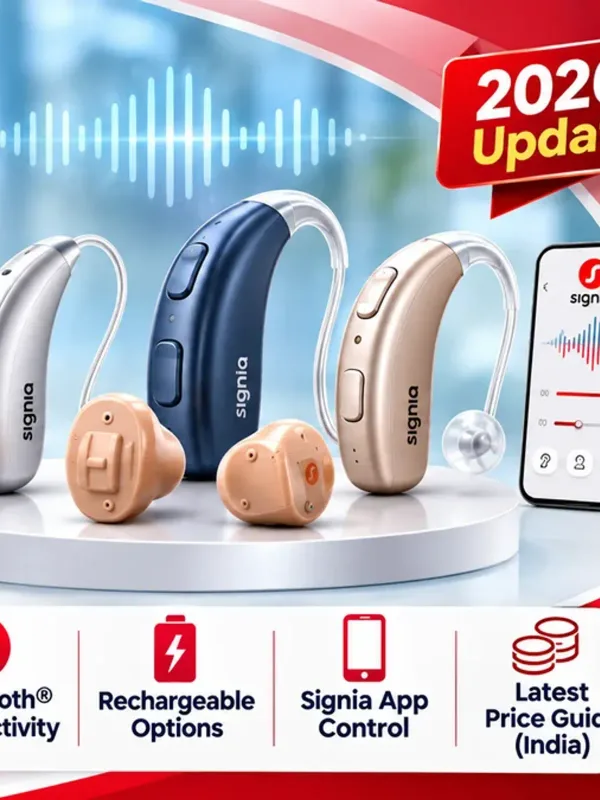 Signia Hearing Aid Latest Update 2026: New MaX AI Hearing Aid, Features and Prices
 आजी-आजोबांसाठी कोणती आरोग्य मशीन? मार्गदर्शन
 ब्रेकिंग न्यूज: श्रवणयंत्रावर 50% सूट | व्हिआर स्पीच अँड हिअरिंग क्लिनिक, अहिल्यानगर
 Hearing Aids November 2026: Latest Updates & Price Guide
 Phonak Hearing Aid Latest Update 2026: New EON Series, Features, Price and Availability
 Widex Hearing Aid Latest Update 2026: Allure AI & Price
 Oticon Reveal 2026: Dual AI hearing aid, features and price
Reader Comments
Comments are reviewed by our desk before they appear. Sign in with your mobile number to join the discussion.