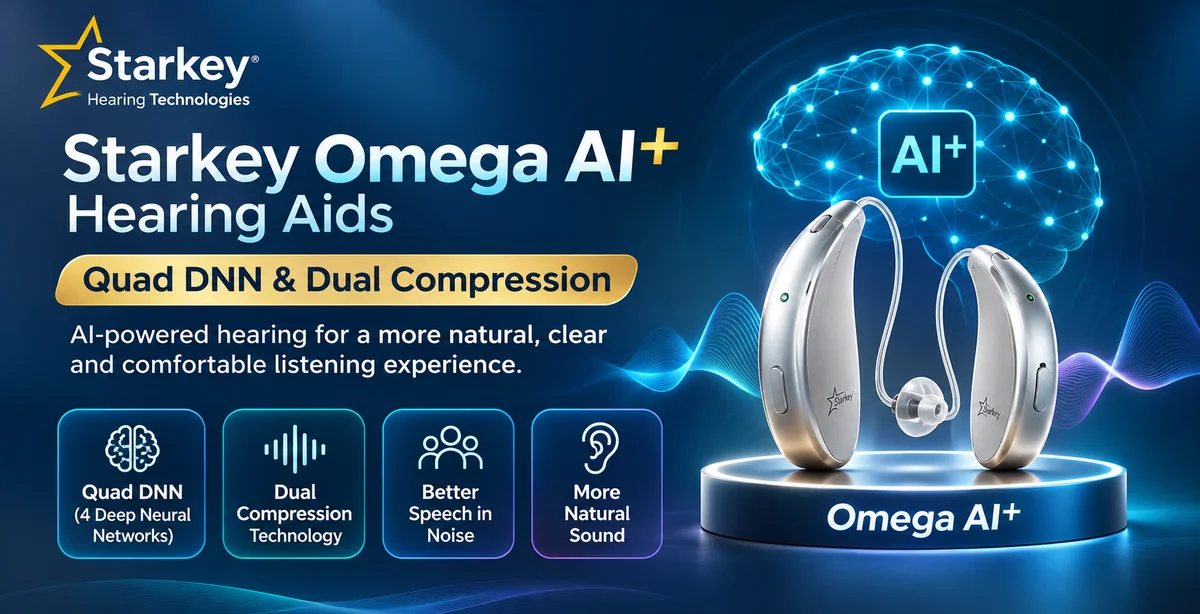
Starkey Omega AI+ Hearing Aids: Quad DNN & Dual Compression
Starkey Omega AI+ adds a fourth AI network, DNN Dual Compression, better feedback control, Auracast and sleep tracking. See what is new and who it suits.
Starkey Omega AI+ Hearing Aids: Four AI Networks, Smarter Compression and Better Everyday Hearing
Hearing aid makers have spent years teaching their devices to separate speech from noise. Starkey’s newest launch looks at something more basic: how a hearing aid decides how much to amplify each sound. On October 1, 2026, the company introduced Omega AI+ at an event in Minneapolis. The family builds on the earlier Omega AI line and brings several upgrades together in one release.
At hearingaidnearme.in, we follow launches like this closely because new features only matter if they help people hear better in daily life. Here is a plain-language look at what Omega AI+ changes.
The Core Upgrade: Four Neural Networks on One Chip
Omega AI+ runs on Starkey’s G4 Gen AI Neuro Processing chip. Starkey describes its design as a Quad DNN Architecture, meaning four deep neural networks work side by side on a single processor. Together they handle:
Speech enhancement
Noise reduction
Directional focus
Spatial awareness
A new DNN-driven compression system
Starkey’s CEO, Brandon Sawalich, framed the launch around practical benefit rather than future promises, saying the aim is to bring brain-inspired technology into a device people wear every day.
What Is DNN Dual Compression?
Compression is one of the oldest ideas in hearing aid design. A person with hearing loss often has a narrow comfortable range between sounds they can barely hear and sounds that feel too loud. The hearing aid squeezes everyday sound into that range, so quiet sounds become audible and loud ones stay comfortable.
The hard part is timing. Fast compression helps you catch short, sharp speech sounds such as consonants. Slow compression keeps background noise steady and sound quality natural. Traditionally, manufacturers had to pick a balance between the two.
Starkey says Omega AI+ avoids that trade-off. Its Dual Compressor uses a neural network to judge the type of sound arriving and apply fast or slow behaviour as needed. Starkey’s executives described the loudness mapping as dynamic, meaning it does both rather than choosing one.
This also targets a common annoyance called the pumping effect. A sudden click, such as a keyboard tap, can make background sound dip and then swell back up. The new system aims to reduce this when no speech is present, while keeping the quick response speech needs. Starkey positions this as a way to use more of the wearer’s remaining hearing range without losing clarity or comfort.
Hearing Speech Without Losing the World Around You
The other three networks build on DNN 360, which debuted with the first Omega AI. Their job is to bring speech forward in noise while keeping you aware of your surroundings.
Strong directional focus can help in a crowded restaurant, but it has a downside. Starkey’s chief hearing health officer, David Fabry, compared it to wearing acoustic blinders: you may miss someone calling from behind. Omega AI+ tries to avoid this by balancing focus with awareness. It also uses motion sensor data, so the response can change depending on whether you are standing still or moving.
Speed is another selling point. Starkey says the G4 chip processes sound up to 2.7 times faster than leading hearing aids that use DNN processing. Lower delay means fewer processing artifacts and better sense of where sounds come from. It may also help people who use a hearing aid in one ear and a cochlear implant in the other, since closer timing between acoustic and electrical sound can make the two feel more aligned.
Stronger Feedback Control
Whistling is still a top complaint among hearing aid users. It happens when amplified sound leaks out of the ear and gets picked up by the microphones again. Omega AI+ introduces a redesigned feedback management system.
In Starkey’s internal testing, the company reported:
21 dB more gain before feedback at mid frequencies
11 dB more gain overall
A 32 dB reduction in feedback artifacts
These figures come from the manufacturer, not independent labs, so treat them as promising rather than proven. If they hold up, the benefit would be greatest for people who need strong amplification but also want open venting to reduce the blocked, hollow sound of their own voice.
A More Flexible Edge Mode
Edge Mode is the on-demand boost for tough listening situations. In Omega AI+, Starkey retrained its neural network on richer data. Users can now leave Edge Mode switched on so it keeps adapting as the environment changes, instead of triggering it again and again.
Fabry said he increasingly sets patients up with one everyday program plus Edge Mode, rather than a long list of separate programs. That makes the hearing aid simpler to live with, especially for first-time users.
Custom Hearing Aids Get Smarter
Custom devices sit inside the ear and are usually chosen for discretion. With this launch, DNN 360 comes to custom rechargeable hearing aids. Starkey is also adding custom non-wireless models with Automatic Edge Mode, bringing adaptive features to its smallest styles.
Battery Life and Auracast
Starkey says the extra neural processing does not shorten battery life compared with the earlier Omega AI platform. The company cites up to 51 hours without streaming for the RIC RT model, and up to 42 hours for the mRIC and custom rechargeable models. Real-world runtime will vary with streaming, listening environments and battery age.
Omega AI+ also supports Auracast, the newer Bluetooth broadcast audio standard. In venues that offer it, such as airports, theatres, gyms or lecture halls, wearers can tune in to a broadcast through the My Starkey app. Audio can come straight from a television, public address system or presentation, which can make speech much clearer than picking it up through the room.
Sleep Tracking and a Left-Behind Alert
Omega AI+ adds Sleep Quality Tracking. Using onboard sensors, it gives nightly sleep scores along with details on sleep cycles and body position. This builds on Starkey’s existing wellness tools, including activity tracking, fall detection, balance features and respiration rate monitoring.
There is a practical catch: you need to wear the hearing aids while you sleep. Fabry noted that some people with significant hearing loss like to do this anyway, for example while travelling, so they do not miss a knock at the door or an alarm. He also said the sleeping position data may interest people with sleep apnea, because position can affect the condition. But Starkey is clear that the devices do not diagnose or screen for sleep apnea or any sleep disorder. Any concerns should go to a doctor.
A new left-behind alert warns you when you walk away from your hearing aids, which is handy if you take them out briefly and forget to put them back.
What Still Needs to Be Proven
Much of the information so far comes from Starkey and its executives. Independent lab testing and real-world feedback will show how well the Dual Compressor, feedback control and DNN features perform. HearAdvisor, an independent hearing aid testing lab, has said it will test these devices, so those results are worth watching.
Is Omega AI+ Right for You?
The best hearing aid depends on your hearing loss, lifestyle, budget and comfort. Omega AI+ may be worth discussing with your audiologist if you:
Struggle with speech in noisy places
Want a rechargeable device with long battery life
Prefer a custom, nearly invisible style
Use a cochlear implant in one ear
Value wellness and safety features
Availability, pricing and model options can differ by country, so confirm locally before deciding. A professional hearing test and a trial period are the best way to find out whether any hearing aid works for you.
FAQs
1. What is Starkey Omega AI+?
It is Starkey’s newest hearing aid family, launched on October 1, 2026. It uses four deep neural networks on one chip and adds a new AI-based compression system, improved feedback control, Auracast support and sleep tracking.
2. What does Quad DNN mean?
It means four specialised neural networks run together on one processor. They handle speech enhancement, noise reduction, directionality and spatial awareness, plus the new dual compression function.
3. What is DNN Dual Compression?
It is a system that uses AI to decide when to use fast or slow compression. This is meant to keep speech clear while reducing pumping and other unnatural sound changes.
4. How long does the battery last?
Starkey cites up to 51 hours without streaming for the RIC RT model and up to 42 hours for the mRIC and custom rechargeable models. Actual use will vary.
5. Does Omega AI+ support Auracast?
Yes. It can receive Auracast broadcast audio in venues that offer it, and the broadcasts can be selected through the My Starkey app.
6. Can the sleep tracking diagnose sleep apnea?
No. Starkey states that it is not a diagnostic or screening tool. It gives sleep scores, cycles and body position, which you can share with a doctor.
7. Does Omega AI+ come in custom styles?
Yes. DNN 360 now extends to custom rechargeable models, and custom non-wireless options add Automatic Edge Mode.
8. How do I choose the right hearing aid?
Start with a hearing test from a qualified audiologist, then compare options based on your hearing profile, lifestyle and budget. You can find clinics and guidance at hearingaidnearme.in.
More from this section



Web Stories
More stories ›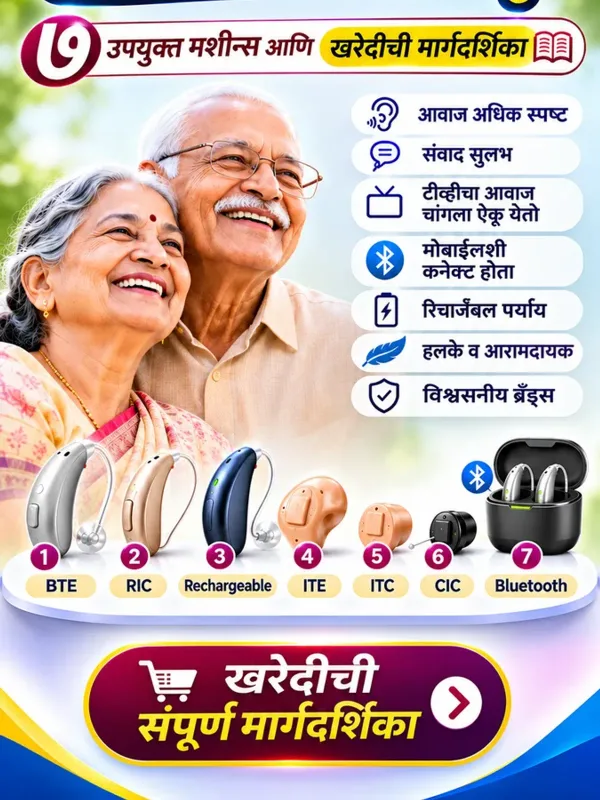 आजी-आजोबांसाठी कोणती आरोग्य मशीन? मार्गदर्शन
 ब्रेकिंग न्यूज: श्रवणयंत्रावर 50% सूट | व्हिआर स्पीच अँड हिअरिंग क्लिनिक, अहिल्यानगर
 Siemens Hearing Aid Guide 2026: Features, Prices, Benefits
 Hearing Aids November 2026: Latest Updates & Price Guide
 Phonak Hearing Aid Latest Update 2026: New EON Series, Features, Price and Availability
 Signia Hearing Aid Latest Update 2026: New MaX AI Hearing Aid, Features and Prices
 Widex Hearing Aid Latest Update 2026: Allure AI & Price
 Oticon Reveal 2026: Dual AI hearing aid, features and price
Reader Comments
Comments are reviewed by our desk before they appear. Sign in with your mobile number to join the discussion.