Siemens Hearing Aid Guide 2026: Features, Prices, Benefits
Siemens hearing aid guide: compare features, 2026 price ranges and benefits, learn how Signia fits in, and pick the right model. Includes FAQs.
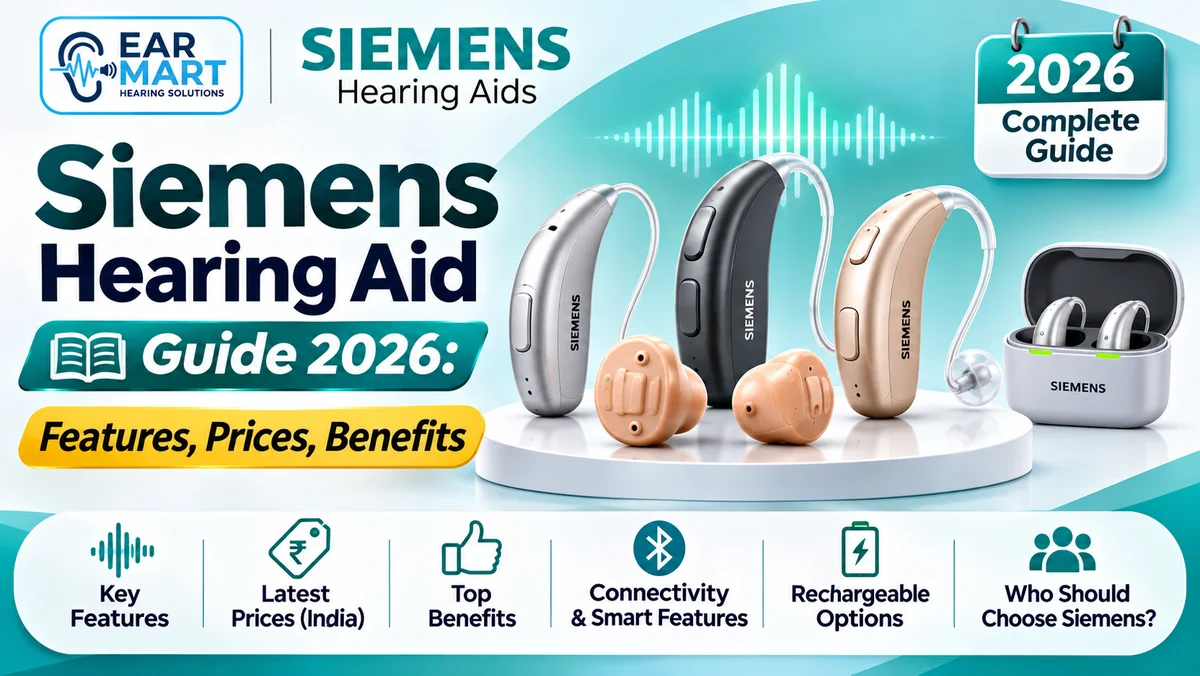
- • Siemens hearing aids are now sold under the Signia brand, so most current “Siemens” models are Signia devices.
- • Modern models offer rechargeable batteries, Bluetooth streaming, smartphone app control and AI-assisted speech clarity.
- • Styles range from discreet in-the-ear and slim designs to powerful behind-the-ear models for severe hearing loss.
- • In India, expect roughly ₹48,000 to ₹90,000 per pair for entry-level models and ₹3,50,000 or more for premium models.
- • Price depends on technology level, style, rechargeability, fitting package, warranty and clinic.
- • Your hearing test results and daily lifestyle should drive the choice, not price alone.
A Siemens hearing aid has long been one of the most recognised names in hearing care, and many people still search for it by that name today. These devices are now sold under the Signia brand, and the current range combines rechargeable batteries, Bluetooth streaming and AI-assisted speech clarity in discreet designs. This guide explains what the range offers, what it costs in India in 2026, the benefits you can realistically expect, and how to choose the right model with confidence.
What Is a Siemens Hearing Aid?
A Siemens hearing aid is a small electronic device that picks up sound through microphones, processes it to match your personal hearing loss, and delivers clearer sound to your ear through a tiny speaker. Unlike a basic sound amplifier, a prescription hearing aid is programmed by an audiologist using your hearing test results, so speech is boosted where you need it while soft sounds stay comfortable and loud sounds stay controlled.
People often call these devices a Siemens hearing machine or ear machine. Whatever the name, the goal is the same: to help you follow conversations, enjoy television, take phone calls and stay connected with family and friends.
Siemens vs Signia: What Changed?
This is the most common point of confusion for buyers. Siemens sold its audiology business in 2015, and the hearing aids were rebranded as Signia from 2016. In 2019 the company behind Signia merged with Widex to form WS Audiology. The technology, research and product lines that people knew as Siemens carried on under the Signia name.
When a clinic or website mentions a Siemens hearing aid today, it usually means one of two things: an older Siemens-branded device that may still be serviced, or a current Signia model. If you are buying new, you will almost always be choosing from the Signia range, so ask your audiologist which platform and model you are being offered.
Key Features of Modern Siemens (Signia) Hearing Aids
AI-assisted speech clarity and noise management
Newer platforms, including the Integrated Xperience (IX) and Augmented Xperience (AX) generations, are designed to separate speech from background noise and keep conversations clear in restaurants, markets and family gatherings. Higher technology levels offer finer control in noisy places.
Own voice processing
Many people find that a hearing aid makes their own voice sound boomy or strange. Own voice processing treats your voice separately so it sounds more natural, which helps new users adapt faster.
Rechargeable batteries
Charge-and-go models use rechargeable batteries with a portable charging case. You drop the hearing aids in the case overnight instead of buying and changing disposable batteries, which is especially helpful for people with limited dexterity.
Bluetooth streaming and app control
Compatible models can stream phone calls, music and video audio directly to your ears. A smartphone app lets you adjust volume, change programs and fine-tune sound. Always confirm that your phone model is supported before you buy.
Tinnitus support
Many models include tinnitus sound therapy features that play soft, soothing sounds to make ringing less noticeable. These tools can help manage tinnitus, but they are not a cure, so speak to your audiologist about realistic expectations.
Durable build
Many models carry water and dust resistance ratings, which gives extra protection against sweat, humidity and everyday wear.
Types and Styles
Style | What it is | Best suited for |
|---|---|---|
Receiver-in-canal (RIC) | Slim case behind the ear with a thin wire to a small speaker in the ear canal | Mild to severe hearing loss; popular, discreet, widely available with rechargeable options |
Behind-the-ear (BTE) | Larger case behind the ear with an earmould or tube | Severe to profound hearing loss; strong power and easy handling |
Slim ultra-discreet (Styletto type) | Very slim, modern design with a stylish charging case | Style-conscious users with mild to moderately severe loss |
In-the-ear and in-the-canal (custom) | Moulded to fit your ear | Mild to moderate loss; very discreet, but smaller controls and fewer features |
Benefits of Siemens Hearing Aids
Clearer conversations: Better speech understanding in quiet rooms and, at higher levels, in noisy places.
More confidence in daily life: Easier phone calls, meetings, family functions and travel.
Convenience: Rechargeable power, app control and wireless streaming reduce daily hassle.
Comfort: Lightweight designs and custom fits are made for all-day wear.
Discreet looks: Slim and custom styles are barely noticeable in everyday use.
Support for brain health and wellbeing: Treating hearing loss early helps keep you engaged in conversation and social life, which research links with healthier ageing.
Wide choice: Entry to premium levels let you match performance to your budget.
Siemens Hearing Aid Price in India (2026)
Prices for a Siemens (Signia) hearing aid in India vary widely by technology level, style and clinic. The table below shows indicative ranges per pair, compiled from Indian clinic price lists in 2026. A single device costs roughly half of the pair price.
Technology level | Typical models and features | Approx. price per pair (INR) | Best for |
|---|---|---|---|
Entry level | Essential sound processing, basic noise reduction, simple controls | ₹48,000 – ₹90,000 | Quiet homes, one-to-one conversations, tight budgets |
Standard | Better speech focus, more channels, wider feature set | ₹90,000 – ₹1,70,000 | Daily life with mixed environments |
Advanced | Stronger noise management, rechargeable and Bluetooth options, app control | ₹1,70,000 – ₹3,50,000 | Active users, frequent social and work settings |
Premium (IX and Styletto class) | Top AI speech processing, own voice processing, premium design and streaming | ₹3,50,000 – ₹7,99,990 | Users who want the most advanced hearing in noisy places |
Good to know: Some clinics advertise older or basic single devices from around ₹25,000, and a few listings show wider ranges. These figures are indicative only. Final prices depend on your city, clinic, fitting package, GST, festive offers and warranty. Always ask for a written quote that shows what is included.
What affects the price?
Technology level: Higher levels process sound faster and manage noise better.
Style: Custom and ultra-slim designs usually cost more than standard RIC or BTE models.
Rechargeability and connectivity: Charging cases, Bluetooth and app features add to the cost.
Fitting and aftercare: Hearing tests, programming, follow-up visits and cleaning services may be bundled or charged separately.
Warranty and insurance: Longer warranty and loss or damage cover raise the upfront price but can protect your investment.
One ear or two: Most people with hearing loss in both ears benefit from two devices.
Ways to reduce the cost
Ask about EMI plans offered by clinics and finance partners.
Check whether your health insurance offers any cover for hearing devices.
If you qualify, look into government support such as the ADIP scheme for eligible persons with disabilities.
Compare the total package, not just the device price: fittings, follow-ups, warranty and service.
How to Choose the Right Siemens (Signia) Hearing Aid
Start with a hearing test. An audiogram from a qualified audiologist shows the type and degree of your hearing loss and which styles are suitable.
Match technology to your lifestyle. If you spend most of your time at home, an entry or standard level may be enough. If you attend meetings, restaurants or events, consider advanced or premium levels.
Pick a style you will actually wear. Comfort, handling and looks all affect daily use.
Check connectivity. Confirm Bluetooth and app support for your phone, and decide whether rechargeable power matters to you.
Ask for a trial period. Wearing the device in your real environments is the best way to judge it.
Compare the whole package. Look at warranty length, service availability, repair policy and follow-up visits.
Care and Maintenance Tips
Wipe your hearing aids daily with a soft, dry cloth and keep ear wax away from the speaker and microphones.
Charge rechargeable models overnight and keep the charging case clean and dry.
Store them in a dry place, away from heat, humidity and children or pets.
Remove them before bathing, swimming or using hair products.
Book regular check-ups for cleaning, software updates and fine-tuning as your hearing changes.
Who Should Consider a Siemens (Signia) Hearing Aid?
You may benefit if you often ask people to repeat themselves, struggle to follow conversation in groups, turn the television up louder than others like, or avoid phone calls and social events because of hearing difficulty. Hearing aids are not a cure for hearing loss, and a medical check-up is important to rule out wax, infection or other conditions that need treatment. This guide is for information only and does not replace advice from an audiologist or doctor.
Frequently Asked Questions
Are Siemens hearing aids still available?
Siemens-branded hearing aids are no longer sold new. The range continues under the Signia brand, and many clinics still use the Siemens name when talking about these devices. Older Siemens models may still be serviced, so check with your clinic.
How much does a Siemens hearing aid cost in India?
In 2026, Siemens (Signia) hearing aids in India cost roughly ₹48,000 to ₹90,000 per pair at entry level and rise above ₹3,50,000 per pair for premium models. Some basic single devices are listed from about ₹25,000. Exact prices depend on the clinic, model and package.
Is a Siemens hearing aid good for severe hearing loss?
Yes, power behind-the-ear models are designed for severe to profound hearing loss. Your audiologist will recommend a model after reviewing your hearing test results.
Are Siemens hearing aids rechargeable?
Many current Signia models are rechargeable and come with a portable charging case. Some models still use disposable batteries, so confirm the power type before you buy.
Do Siemens hearing aids work with iPhone and Android?
Many current models support Bluetooth streaming and app control on both iPhone and Android. Features differ by model and phone, so ask for a demonstration with your own phone.
How long does a Siemens hearing aid last?
Most hearing aids last around four to six years with good care and regular servicing. Lifespan depends on use, cleaning habits, exposure to moisture and the warranty and repair support available.
Can Siemens hearing aids help with tinnitus?
Many models include tinnitus sound therapy features that can make ringing less noticeable. They help manage symptoms rather than cure tinnitus, so discuss options with your audiologist.
Should I buy one hearing aid or two?
If you have hearing loss in both ears, two hearing aids usually give better balance, clearer speech in noise and easier sound direction. Your audiologist can advise based on your test results.
Can I buy a Siemens hearing aid online?
It is safer to buy through a qualified audiologist or authorised clinic. Hearing aids need to be programmed to your hearing loss, and fitting, follow-up and warranty support make a big difference to results.
More from this section
Signia Hearing Aid Latest Update 2026: New MaX AI Hearing Aid, Features and Prices

Hearing Aids November 2026: Latest Updates & Price Guide
Widex Hearing Aid Latest Update 2026: Allure AI & Price
Reader Comments
Comments are reviewed by our desk before they appear. Sign in with your mobile number to join the discussion.