Top 5 Signs You Need a Hearing Test | Don’t Ignore Them
Struggling to follow conversations or turning up the TV? Discover the top 5 signs you need a hearing test and when to book a check-up with an audiologist.
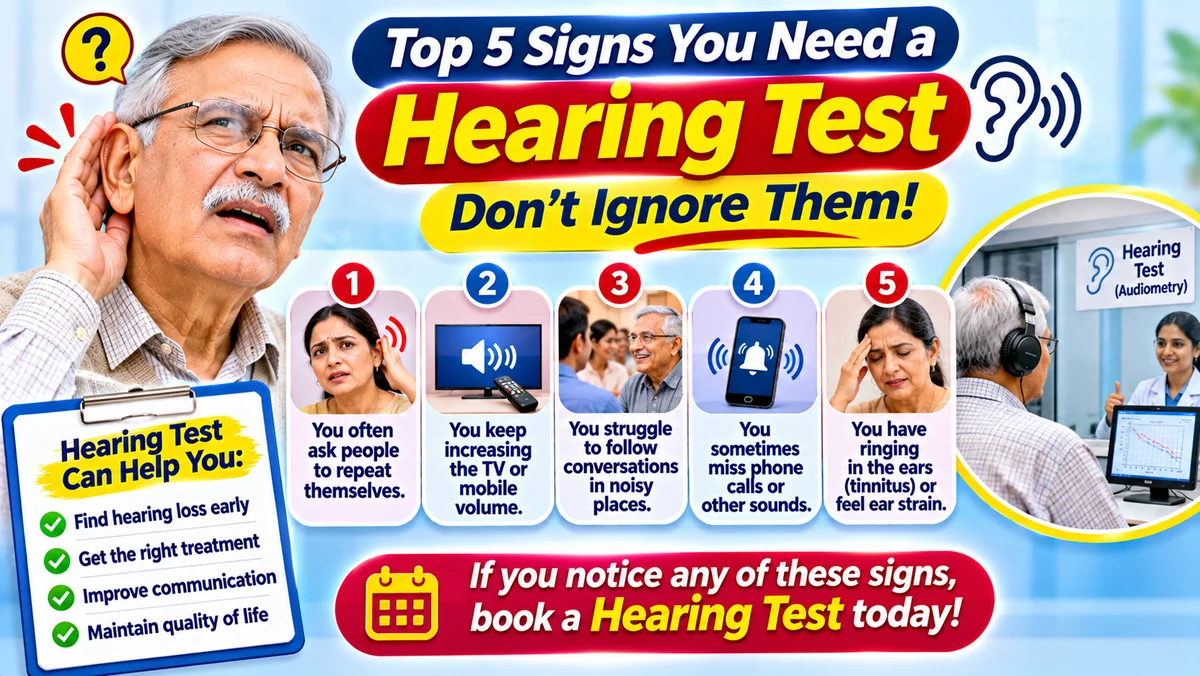
Hearing loss rarely arrives with a bang. It creeps in so gradually that most people adjust without noticing: nudging the volume up, asking friends to repeat themselves, or quietly skipping noisy restaurants. If that sounds familiar, you may be looking at some of the most common signs you need a hearing test.
The sooner hearing changes are found, the easier they are to manage. Acting early protects your relationships, your safety, your performance at work, and even your long-term brain health. In this guide, you will learn the top 5 signs you need a hearing test, what may be behind them, and exactly what to do next.
Quick Answer: The 5 Signs at a Glance
You should book a hearing test if you:
Often ask people to repeat themselves
Struggle to follow conversations in noisy places
Turn the TV or phone volume up higher than others like
Hear ringing, buzzing, or muffled sounds in your ears
Feel tired, frustrated, or tempted to avoid social situations because of the effort of listening
Sign 1: You Keep Asking People to Repeat Themselves
Saying “pardon?” or “what was that?” now and then is normal. Saying it several times a day is not. If you regularly miss words, guess what someone said, or nod along without really understanding, your ears may be struggling to pick up speech.
Early hearing loss often affects high-pitched sounds first. Those sounds carry the crisp consonants (such as s, f, th, and t) that make words distinct. The result is that people seem to mumble, even though you can hear that they are talking. You catch the vowels but lose the details.
This sign is easy to dismiss because it is tempting to blame the speaker. But if more than one person seems to be mumbling, the common factor may be your hearing rather than their speech. A simple hearing test can quickly confirm which it is.
Sign 2: You Struggle to Follow Conversations in Noisy Places
Crowded cafés, family dinners, team meetings, and busy streets all demand that your ears separate speech from background noise. This is one of the first tasks to become difficult when hearing declines.
If you can chat comfortably one-to-one at home but lose the thread in a group or a restaurant, that is a classic early warning sign. You may find yourself watching lips closely, leaning in, or choosing seats so you can see the speaker’s face. Some people even start declining invitations because the effort no longer feels worth it.
Difficulty hearing in noise can show up even when your hearing seems fine in quiet settings, which is why it often goes undiagnosed for years. A comprehensive hearing test, including speech-in-noise measures where available, gives a much clearer picture.
Sign 3: You Turn Up the TV or Phone Volume
Do family members complain that the TV is too loud? Do you raise the volume on your phone, car stereo, or headphones just to follow along? Do you rely on subtitles more than you used to?
Needing louder sound than the people around you is one of the most reliable signs you need a hearing test. It also carries a downside: listening at high volume can add strain to ears that are already sensitive, especially with earbuds. Because the change happens gradually, you may not notice it yourself, so pay attention when others point it out. They often spot it before you do.
Also watch for missed everyday sounds such as the doorbell, a ringing phone, birdsong, or a car’s turn signal. If these seem to have faded from your day, your hearing may be the reason.
Sign 4: You Hear Ringing, Buzzing, or Muffled Sounds
Tinnitus (ringing, buzzing, hissing, or whistling in the ears) is common, and it often goes hand in hand with hearing loss. A feeling of fullness in the ears, or sounds that seem far away or underwater, are also red flags.
Brief ringing after a loud concert is common and usually fades. But if the sound is constant, keeps coming back, is louder than usual, or affects only one ear, get it checked. Persistent tinnitus can be linked to noise damage, age-related changes, earwax build-up, infection, or other conditions that deserve a professional assessment.
Important: sudden hearing loss, particularly in one ear, is a medical emergency. If your hearing drops over a few hours or days, seek urgent medical care rather than waiting for a routine appointment.
Sign 5: You Feel Tired, Frustrated, or Start Avoiding Social Situations
Hearing loss is not just about sound. It affects how you feel. When your brain works overtime to decode speech, you may feel drained after social events, phone calls, or meetings. You might become irritable, anxious, or embarrassed about misunderstandings.
Over time, many people start to withdraw by skipping gatherings, avoiding phone calls, or letting others do the talking. Research has linked untreated hearing loss with social isolation, low mood, and a higher risk of cognitive decline. The encouraging news is that addressing hearing loss early can help you stay connected, confident, and engaged.
If loved ones suggest you might have trouble hearing, take it seriously. They are rarely criticizing. More often, they have noticed a change and care about you.
Who Is at Higher Risk of Hearing Loss?
Anyone can develop hearing loss, but regular testing is especially valuable if you:
Are over the age of 50
Have been exposed to loud noise at work, at concerts, or through headphones
Have a family history of hearing loss
Live with diabetes, high blood pressure, or heart disease
Take medicines that can affect hearing (ask your doctor or pharmacist)
Have had repeated ear infections or a head injury
What Happens During a Hearing Test?
A hearing test is quick, painless, and non-invasive. An audiologist will usually look inside your ears first, then play a series of soft tones through headphones and ask you to signal each time you hear one. They may also check how well you understand spoken words. Your results are plotted on a chart called an audiogram, which shows the softest sounds you can hear at different pitches.
Based on the results, you may be told your hearing is normal, advised to treat earwax or an infection, or guided toward hearing aids or other solutions. Modern hearing aids are small, discreet, and far more advanced than older models, with features such as noise reduction and Bluetooth connectivity.
When Should You Book a Hearing Test?
If you recognize even one of the signs above, do not wait for things to get worse. Hearing changes rarely improve on their own, and early support makes it easier for your brain to adapt to better sound. Book a hearing test with a qualified audiologist or hearing specialist as soon as you can, and bring a family member or friend if you like. They can share what they have noticed.
Final Thoughts
Your hearing connects you to the people, sounds, and moments you love. If you often ask people to repeat themselves, struggle in noisy places, turn up the volume, hear ringing or muffled sounds, or feel worn out by conversation, these are clear signs you need a hearing test. A short, painless check-up could be the first step toward clearer conversations and a more connected life. Do not ignore the signals. Schedule your hearing test today.
Frequently Asked Questions (FAQs)
1. How do I know if I need a hearing test? You may need a hearing test if you often ask people to repeat themselves, struggle to follow conversations in noisy places, turn the volume up higher than others, hear ringing in your ears, or feel exhausted after conversations. If loved ones mention your hearing, that is another good reason to get tested.
2. At what age should I get my hearing tested? Many hearing professionals suggest a baseline check by around age 50, followed by regular tests every few years. If you have risk factors such as noise exposure, a family history of hearing loss, or you notice any changes, get tested sooner at any age.
3. Is a hearing test painful? No. A hearing test is completely painless and non-invasive. You simply listen to tones or words through headphones and respond when you hear them.
4. How long does a hearing test take? A basic hearing screening can take only a few minutes, while a full evaluation with an audiologist usually takes about 30 to 60 minutes, including time to discuss your results.
5. Does ringing in the ears always mean hearing loss? Not always, but tinnitus and hearing loss often occur together. Ringing can also be caused by earwax, loud noise exposure, stress, or other health conditions. If it is persistent or affects only one ear, have it checked.
6. Can hearing loss be reversed? It depends on the cause. Hearing loss caused by earwax or an infection can often be treated. Permanent hearing loss from ageing or noise damage cannot usually be reversed, but it can be managed very effectively with hearing aids and other support.
More from this section

Ear Machine: Complete 2027 Guide to Hearing Aids in India
डिजिटल श्रवणयंत्र म्हणजे काय? कसे काम करते? संपूर्ण माहिती

Hearing Clinic in New York Expert Hearing and Speech Care for Adults 50+

किशोरवयीन मुलांसाठी सर्वोत्तम IIC श्रवणयंत्र भारतात 2027 – किंमत, मॉडेल्स आणि पालकांसाठी संपूर्ण मार्गदर्शक
Web Stories
More stories › आजी-आजोबांसाठी कोणती आरोग्य मशीन? मार्गदर्शन
 ब्रेकिंग न्यूज: श्रवणयंत्रावर 50% सूट | व्हिआर स्पीच अँड हिअरिंग क्लिनिक, अहिल्यानगर
 Hearing Aids November 2026: Latest Updates & Price Guide
 Siemens Hearing Aid Guide 2026: Features, Prices, Benefits
 Phonak Hearing Aid Latest Update 2026: New EON Series, Features, Price and Availability
 Signia Hearing Aid Latest Update 2026: New MaX AI Hearing Aid, Features and Prices
 Widex Hearing Aid Latest Update 2026: Allure AI & Price
 Oticon Reveal 2026: Dual AI hearing aid, features and price
Reader Comments
Comments are reviewed by our desk before they appear. Sign in with your mobile number to join the discussion.