Apple Hearing Test vs Clinic Audiometry: Is It Accurate?
New research compared the Apple hearing test with clinic audiometry. See how close the results were, where it falls short, and when to see an audiologist.

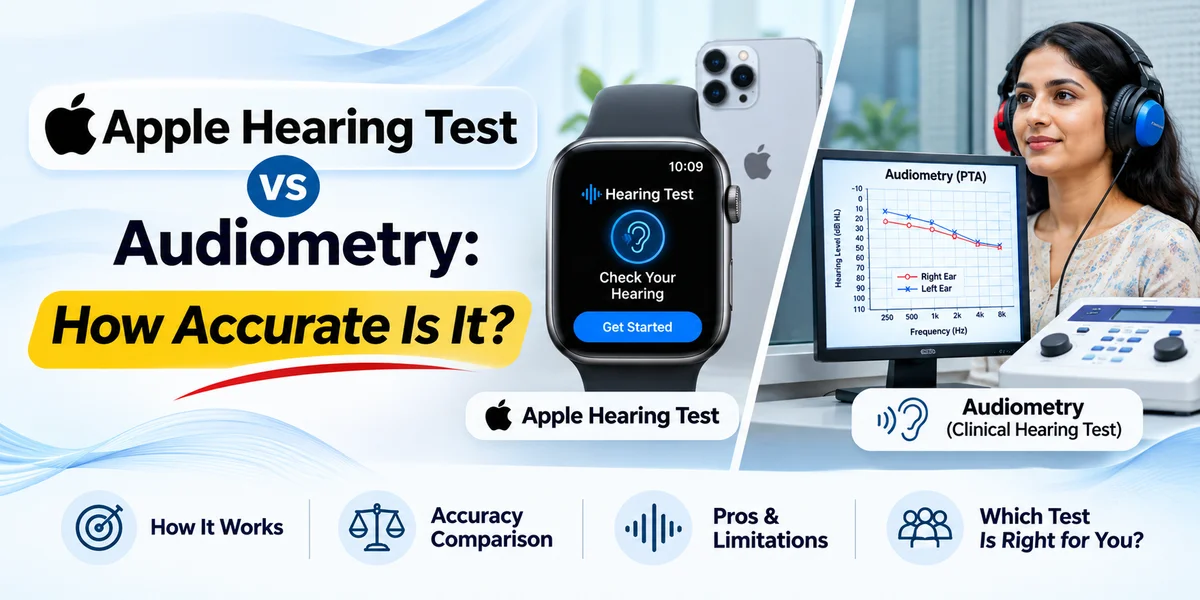
- A small pilot study from an Australian hospital ear, nose and throat (ENT) clinic compared the Apple hearing test with standard clinic audiometry (pure tone audiometry).
- 20 adults joined, and 17 completed the Apple test, a completion rate of 85%.
- On average, the Apple test showed thresholds about 1.9 dB lower than the clinic test, a very small gap.
- No single frequency showed a statistically significant difference between the two methods.
- Results were least consistent at the lowest (250 Hz) and highest (8 kHz) pitches.
- Three people could not finish the app test because of background noise or a poor earbud seal.
Apple Hearing Test vs Audiometry: How Accurate Is It?
Smartphones and earbuds are changing how people check their hearing. One of the most talked-about options is the Apple hearing test, which runs on an iPhone with compatible AirPods Pro earbuds. A new pilot study published in the Australian Journal of Otolaryngology asked a practical question: how close are its results to a standard hearing test done in a clinic?
Why Hearing Tests Matter
Hearing loss is one of the leading causes of disability worldwide, and the World Health Organization expects the number of people affected to pass 2.5 billion by 2050. Untreated hearing loss can affect communication, relationships, work and mental wellbeing. It has also been linked to a higher risk of dementia in older adults.
The usual way to measure hearing is pure tone audiometry, done by a trained audiologist in a sound-controlled room. It is accurate, but appointments can be expensive and hard to get, especially in rural areas or places with few hearing specialists. That is why app-based tests are attracting so much interest.
What the Researchers Did
Between December 2025 and January 2026, doctors at an ENT outpatient clinic in Queensland, Australia, invited adult patients who had taken a formal hearing test within the previous 30 days. Each patient then took the Apple hearing test using AirPods Pro 3 paired with an iPhone 17 Pro.
The two sets of results were compared across six pitches, from low (250 Hz) to high (8 kHz), in both ears. The test was done in a normal, busy clinic room, not a special quiet booth. That is the real-world setting where a doctor would actually use a quick hearing check.
What They Found
Of the 20 patients, 17 completed the app test and were included in the analysis. The key results were:
Average difference: The Apple test read about 1.9 dB lower than the clinic test, which is small.
Range of agreement: For most measurements, the gap between the two tests fell between about −18 dB and +14 dB.
Frequency by frequency: Differences ranged from roughly −4.4 to +4.6 dB, and none were statistically significant.
Severity groups: The share of results in the normal, mild, moderate, severe and profound categories was almost the same for both tests.
Most results that fell outside the expected range were at the lowest and highest pitches. This matches other research showing that consumer-grade tests are less consistent at the extremes.
Where the Apple Hearing Test Struggled
Three of the 20 patients could not finish the test. Two were stopped by noise in the clinic, and one could not get a proper seal with the earbud. In a quiet home it may work better, but a good fit and a quiet space clearly matter.
The study also had limits:
The sample was very small.
Patients were already under specialist care, so they may not represent the general public.
The clinic tests were done at different audiology practices with different equipment.
The two tests were taken up to 30 days apart, so real changes in hearing could not be ruled out.
What This Means for You
The Apple hearing test may be a convenient way to spot possible hearing changes or keep track of your hearing between appointments. But it measures only how well sound travels through the air to your ear. It cannot show whether the problem is in the middle ear or the inner ear, and it cannot replace a full exam. The researchers were clear that the study does not prove the app is equal to a diagnostic hearing test.
When to See a Hearing Specialist
Book a professional hearing test if:
Your app result suggests hearing loss in one or both ears.
You often ask people to repeat themselves or struggle in noisy places.
You have ringing in the ears, ear pain, fluid or dizziness.
You notice your hearing getting worse over time.
If you lose hearing suddenly, treat it as urgent and see a doctor immediately.
Take the Next Step With Hearing Aid Near Me
If a quick check leaves you worried about your hearing, the next step is a proper evaluation. Visit hearingaidnearme.in to explore hearing aid options and find hearing care close to you. Early testing and the right hearing support can make daily conversations easier and help protect your long-term hearing health.
FAQs
1. Is the Apple hearing test as accurate as a hearing test at a clinic?
In this small pilot study, the average results were very close. But only 17 people were analysed, so it does not prove the two tests are equivalent. A clinic test is still the gold standard.
2. Can the Apple hearing test diagnose hearing loss?
No. It is a self-test that measures air conduction only, so it cannot identify the type or cause of hearing loss. A professional hearing test and ear examination are needed for that.
3. Which earbuds does the Apple hearing test need?
The study describes it as available with AirPods Pro 2 and AirPods Pro 3, used with a compatible Apple device. Availability can vary by country and software version, so check Apple's support information for your region.
4. Why do some people fail to complete the test?
In the study, background noise and a poor earbud seal were the reasons. Using the right ear tip size and taking the test in a quiet room helps.
5. Which pitches are least reliable on the app?
Results differed most at the lowest (250 Hz) and highest (8 kHz) pitches.
6. If the app shows hearing loss, do I need a hearing aid right away?
Not necessarily. First get a formal hearing test to confirm the loss and its cause. If a hearing aid is advised, hearingaidnearme.in can help you explore options and find hearing care near you.
7. Who should not rely on the app alone?
Anyone with sudden hearing loss, ear pain, discharge, dizziness, ringing in the ears or a history of ear disease should see a doctor or audiologist instead of relying on an app.
More from this section
Web Stories
More stories › कानात दडे बसणे: कारणे, लक्षणे आणि उपचार
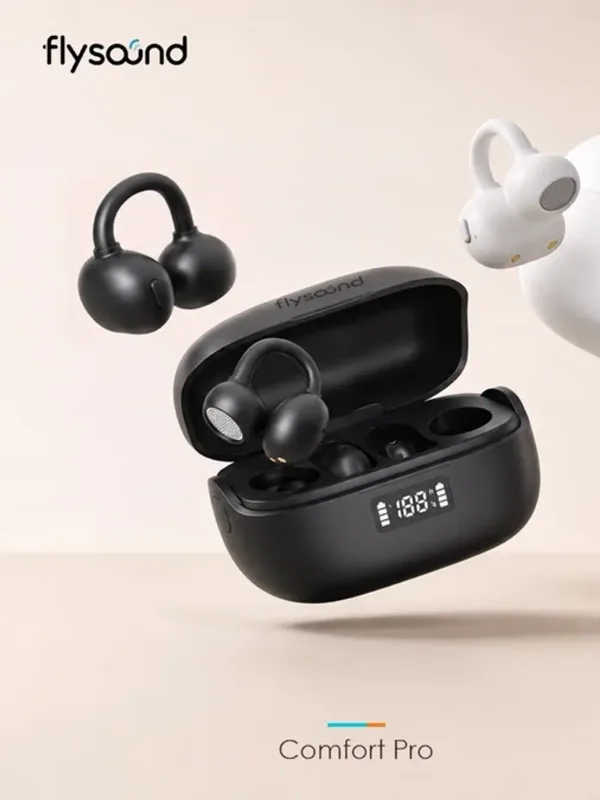 Flysound Comfort Pro: OTC AI hearing aid with remote mic
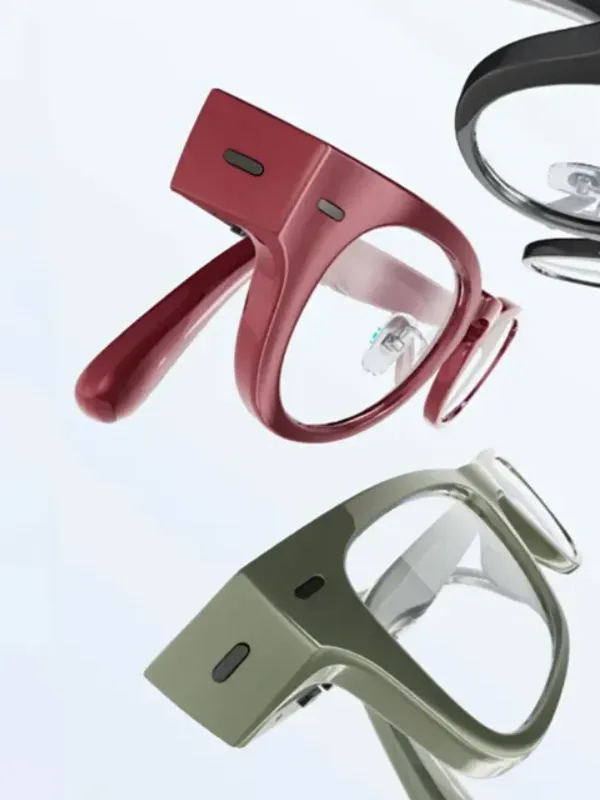 Nuance Audio Plus: New Hearing Glasses Explained
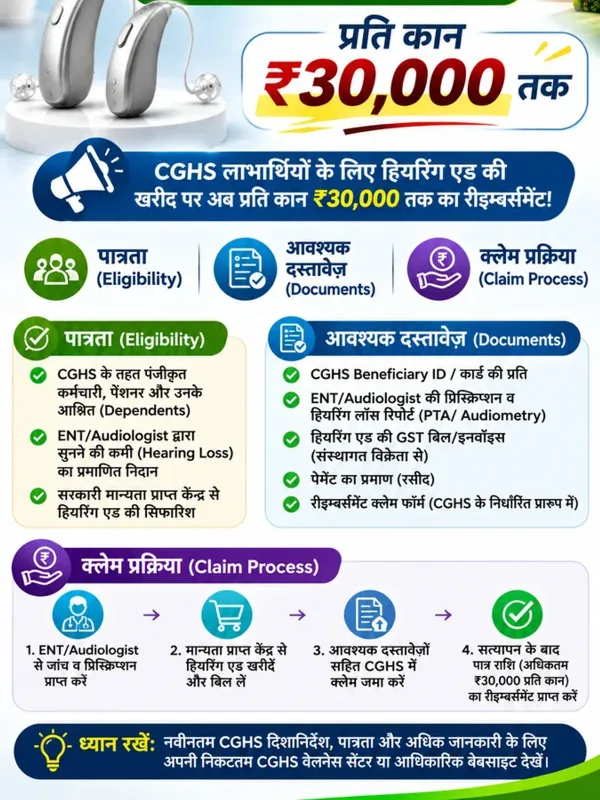 CGHS हियरिंग एड रीइम्बर्समेंट 2026: प्रति कान ₹30,000 तक, पात्रता, दस्तावेज़ और क्लेम प्रक्रिया
 Widex Allure AI RIC Explained: What On-Demand AI Hearing Aids Mean for Buyers in India
 आजी-आजोबांसाठी कोणती आरोग्य मशीन? मार्गदर्शन
 ब्रेकिंग न्यूज: श्रवणयंत्रावर 50% सूट | व्हिआर स्पीच अँड हिअरिंग क्लिनिक, अहिल्यानगर
 Hearing Aids November 2026: Latest Updates & Price Guide
 Oticon Hearing Aids Discontinued in India: Full List 2026
 Siemens Hearing Aid Guide 2026: Features, Prices, Benefits
Reader Comments
Comments are reviewed by our desk before they appear. Sign in with your mobile number to join the discussion.