GJB2 Hearing Loss: Causes, Gene Therapy & Hearing Aids
Learn what causes GJB2 hearing loss, why gene therapy isn't ready yet, and how hearing aids and cochlear implants can help. Latest research explained.

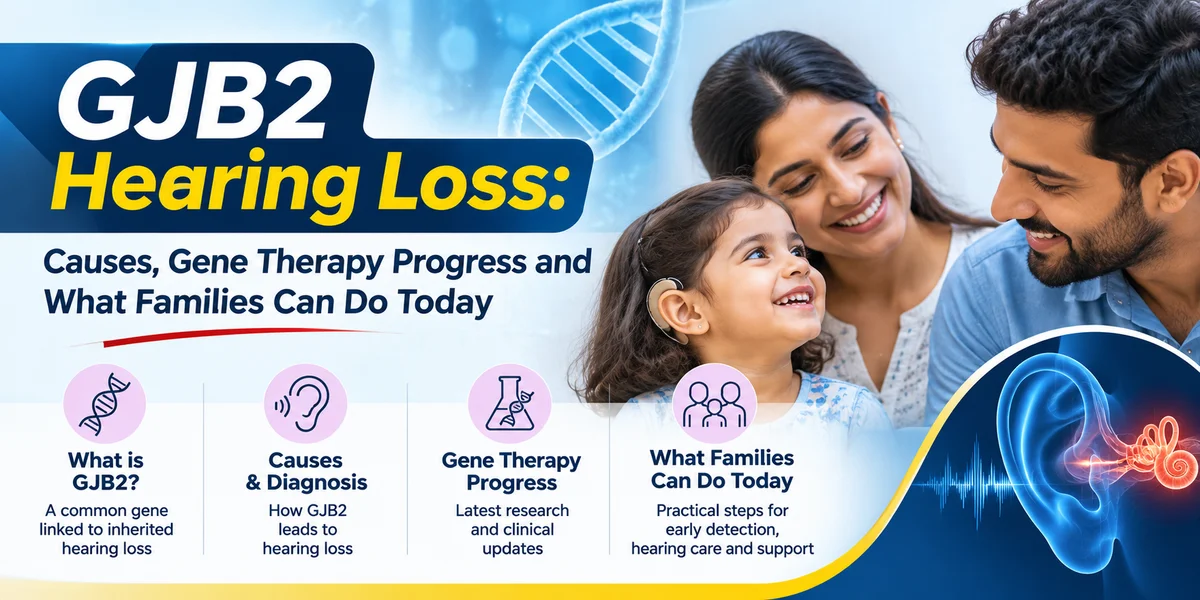
- Changes in the GJB2 gene (which makes the protein connexin 26) cause more than half of inherited hearing loss without other medical conditions.
- Over 100 harmful GJB2 variants are known. Their effects range from profound deafness at birth to mild hearing loss that slowly worsens.
- Mouse studies suggest deafness at birth comes mainly from abnormal inner ear development, while late-onset loss comes from a weaker "amplifier" in the cochlea.
- Gene therapy has restored connexin 26 in animal ears, but hearing recovery has been limited so far. No human trial has proven it works.
- Cochlear implants work well in GJB2-related deafness, and hearing aids can help many people with milder loss.
- Early screening, genetic testing and a visit to a qualified audiologist remain the best steps for families.
GJB2 Hearing Loss: What Science Says Now
If your child has been diagnosed with hearing loss and a doctor mentioned a gene called GJB2, you are not alone. This one gene is behind more than half of all inherited hearing loss that occurs without other health problems. A 2026 review in Communications Medicine by Hong-Bo Zhao and Xiaoling Lu brings together decades of research on how these gene changes harm the ear and how close gene therapy really is. Here is what it says, in plain language.
What Is GJB2 Hearing Loss?
GJB2 carries the instructions for a protein called connexin 26 (Cx26). Harmful changes in this gene cause genetic deafness known as DFNB1 (inherited from both parents) or DFNA3 (a dominant form). More than 100 harmful variants have been found, and their effects vary widely. Some babies are born profoundly deaf. Others hear normally at first and lose hearing gradually through childhood or later.
The review also points out that doctors usually cannot predict severity from the exact gene change alone. People with the same variant, even siblings, can have very different hearing, which suggests other genes or environmental factors play a part.
How Connexin 26 Supports the Inner Ear
The cochlea, the snail-shaped hearing organ, depends on tiny channels called gap junctions. They let neighbouring cells share ions, nutrients and signals. Cx26 and a close relative, Cx30, build these channels into two separate networks. One links the supporting cells around the hair cells. The other links connective tissue cells in the cochlea's outer wall.
The sound-sensing hair cells and the nerve cells that send signals to the brain do not produce these proteins at all. Yet when Cx26 is missing, these cells still deteriorate over time. This suggests the damage starts in the supporting cells and spreads. It also sets a strict rule for future treatments: therapeutic Cx26 must reach supporting cells only, never hair cells or nerve cells.
Why Some Children Are Born Deaf and Others Lose Hearing Slowly
Most of what we know comes from mouse models. They point to four main problems when Cx26 is lacking: loss of hair cells and nerve cells, abnormal cochlear development, a drop in the electrical charge that powers hair cells, and weaker active amplification of sound.
Deafness at birth. The review argues that abnormal development is the main cause. In mice lacking Cx26 early in life, a key space called the tunnel of Corti never opens, and the covering membrane stays stuck to nearby tissue. Hair cell bundles then cannot move properly in response to sound. Hearing loss appeared before major cell loss, and the voltage drop alone could not explain it. Timing mattered: removing Cx26 before about day five after birth caused deafness, while removing it later left early hearing intact.
Late-onset hearing loss. Here the cochlea develops normally and hearing fades later, usually affecting high pitches first. The leading explanation is a weakening of the ear's built-in amplifier, the outer hair cells, which boost faint sounds. Tests of this amplifier decline alongside hearing.
So GJB2 hearing loss is not one disease with one cause, and treatments may need to differ for each type.
GJB6 Combinations and the Retired Potassium Theory
Some people inherit a harmful GJB2 change on one gene copy and a GJB6 deletion (the gene for Cx30) on the other. This pairing is the second most common genetic cause of recessive nonsyndromic deafness in several populations. Mouse work suggests the problem lies in the cochlea's outer wall, where a lower electrical potential leaves less power for hearing.
The review also challenges a long-popular idea that faulty potassium recycling poisons hair cells. The authors give several reasons it is unlikely to be the main cause. Hearing loss comes before cell death, Cx30 keeps some channel function alive, and the first step of potassium uptake does not depend on gap junctions.
What We Know About GJB2 Changes in People
Human evidence is limited because the inner ear is almost impossible to examine in living patients. Only one temporal bone study exists. A patient with two different GJB2 variants had profound deafness, widespread hair cell loss and an underdeveloped stria vascularis. CT scans suggest about half of ears with GJB2 variants show bone abnormalities, hinting that developmental problems also occur in humans.
Researchers have also built mice carrying common human variants. The two most frequent truncating variants, c.35delG (common in people of European ancestry) and c.235delC (common in East Asia), produced profound deafness with a closed tunnel of Corti and low electrical potential. The V37I variant, common in Asia, caused milder, progressive hearing loss with normal cochlear structure. This matches what many patients experience.
Where Gene Therapy Stands
Gene therapy has had a breakthrough in another deafness gene, OTOF, with encouraging human results. GJB2 is the most common deafness gene, but it has not reached that stage. No human trial has yet shown that GJB2 gene replacement works.
In animal studies, harmless viruses called AAV vectors have delivered a working GJB2 copy into the cochlea. These efforts restored Cx26, partly repaired gap junctions and looked safe in mice and non-human primates. But hearing improvement stayed modest.
The authors urge caution for several reasons:
Some mouse models had only mild hearing loss, unlike the profound deafness seen in most patients.
Few studies checked whether cochlear structure was repaired.
Small groups of animals can produce misleading results because of natural variation.
A mouse cochlea keeps developing after birth, but a human cochlea is essentially complete at birth. Treating a newborn mouse is therefore not the same as treating a human baby.
Gene editing tools, such as base editing and prime editing, are also being explored. So are medicines that reduce stress and inflammation in the inner ear. These drugs would not fix the gene, but they might protect remaining hearing or support gene therapy later.
What Researchers Plan Next
The review sets out a clear agenda:
Understand how Cx26 loss disrupts cochlear development, cell survival and the ear's amplifier.
Build mutation-specific animal models, including non-mouse models such as pigs, since mouse embryos lacking Cx26 often do not survive.
Improve viral vectors so they work efficiently and target only the right supporting cells.
Find the genetic and other factors that explain why identical variants cause very different hearing levels.
Study a surprising natural backup. When Cx26 is lost, the cochlea can switch on Cx46, a connexin normally found in the eye lens. Learning how to boost this response could open a new treatment route.
What This Means for Families Today
Gene therapy for GJB2 is not an approved treatment, and families should be wary of any clinic that claims otherwise. The encouraging news is that current options work well for many people. The review notes that cochlear implants successfully restore hearing in GJB2-related deafness. This suggests the problem lies mainly in the inner ear rather than the brain. For mild to moderate or progressive loss, properly fitted hearing aids often make a significant difference.
Practical steps to consider:
Make sure every newborn gets hearing screening, and follow up promptly if the result is unclear.
Ask an ENT specialist about genetic testing for unexplained hearing loss.
Get hearing checked regularly if a GJB2 change is found, even when hearing seems normal.
See a qualified audiologist for hearing aid trials and fitting, and for cochlear implant evaluation if the loss is severe.
Begin early. Timely amplification and speech therapy support language development in children.
The Bottom Line
GJB2 hearing loss is common, varied and still not fully understood, but research is moving in a hopeful direction. Until a safe and effective gene therapy arrives, early diagnosis and the right hearing devices remain the best path forward. If you are searching for hearing aids or trusted hearing care, hearingaidnearme.in can help you find the right support.
FAQs
1. What is GJB2 hearing loss?
It is inherited hearing loss caused by changes in the GJB2 gene, which makes the connexin 26 protein. The protein helps cells in the inner ear communicate and stay healthy. Severity ranges from mild to profound.
2. Can gene therapy cure GJB2 deafness right now?
No. Gene therapy has restored connexin 26 in animal ears, but hearing recovery has been limited, and no human trial has proven it works. It is still at the research stage.
3. Is GJB2 hearing loss inherited?
Yes. The most common form is recessive, meaning a child inherits a changed gene from both parents, who may each have normal hearing. A dominant form also exists. A genetic counsellor can explain the chances in your family.
4. Can GJB2 hearing loss get worse over time?
In some people, yes. Certain variants cause hearing that is normal or mildly reduced at first and then declines gradually, often affecting high-pitched sounds first. Regular hearing tests help track this.
5. Do hearing aids help with GJB2 hearing loss?
Many people with mild to moderate GJB2-related loss benefit from properly fitted hearing aids. An audiologist can test your hearing and recommend suitable devices.
6. Do cochlear implants work for GJB2 deafness?
Yes. Cochlear implants have been reported to restore hearing successfully in people with GJB2-related deafness, which suggests the hearing nerve pathway to the brain is usable. An ENT specialist and audiologist can assess who is a good candidate.
7. Should my baby have a genetic test if hearing screening is abnormal?
Speak to an ENT specialist or paediatrician. Genetic testing can identify GJB2 changes and help guide monitoring, treatment choices and family planning.
More from this section




Web Stories
More stories › कानात दडे बसणे: कारणे, लक्षणे आणि उपचार
 Flysound Comfort Pro: OTC AI hearing aid with remote mic
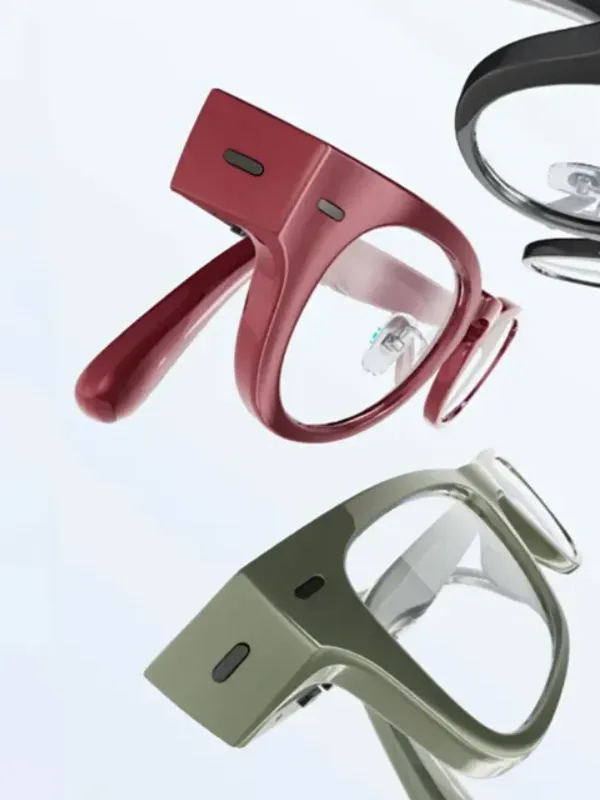 Nuance Audio Plus: New Hearing Glasses Explained
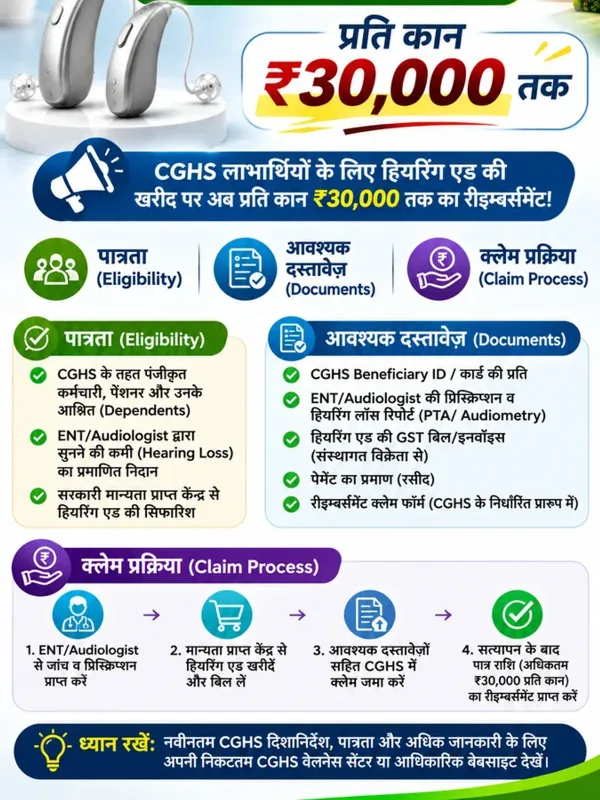 CGHS हियरिंग एड रीइम्बर्समेंट 2026: प्रति कान ₹30,000 तक, पात्रता, दस्तावेज़ और क्लेम प्रक्रिया
 Widex Allure AI RIC Explained: What On-Demand AI Hearing Aids Mean for Buyers in India
 आजी-आजोबांसाठी कोणती आरोग्य मशीन? मार्गदर्शन
 ब्रेकिंग न्यूज: श्रवणयंत्रावर 50% सूट | व्हिआर स्पीच अँड हिअरिंग क्लिनिक, अहिल्यानगर
 Hearing Aids November 2026: Latest Updates & Price Guide
 Oticon Hearing Aids Discontinued in India: Full List 2026
 Siemens Hearing Aid Guide 2026: Features, Prices, Benefits
Reader Comments
Comments are reviewed by our desk before they appear. Sign in with your mobile number to join the discussion.