GN Hearing Grows 5% as Amplifon Deal Nears Completion
GN Hearing posts 5% Q3 2026 growth led by ReSound Sensia as the Amplifon acquisition gains EU approval and targets a year-end close.

GN Hearing Grows 5% as Amplifon Deal Nears Completion
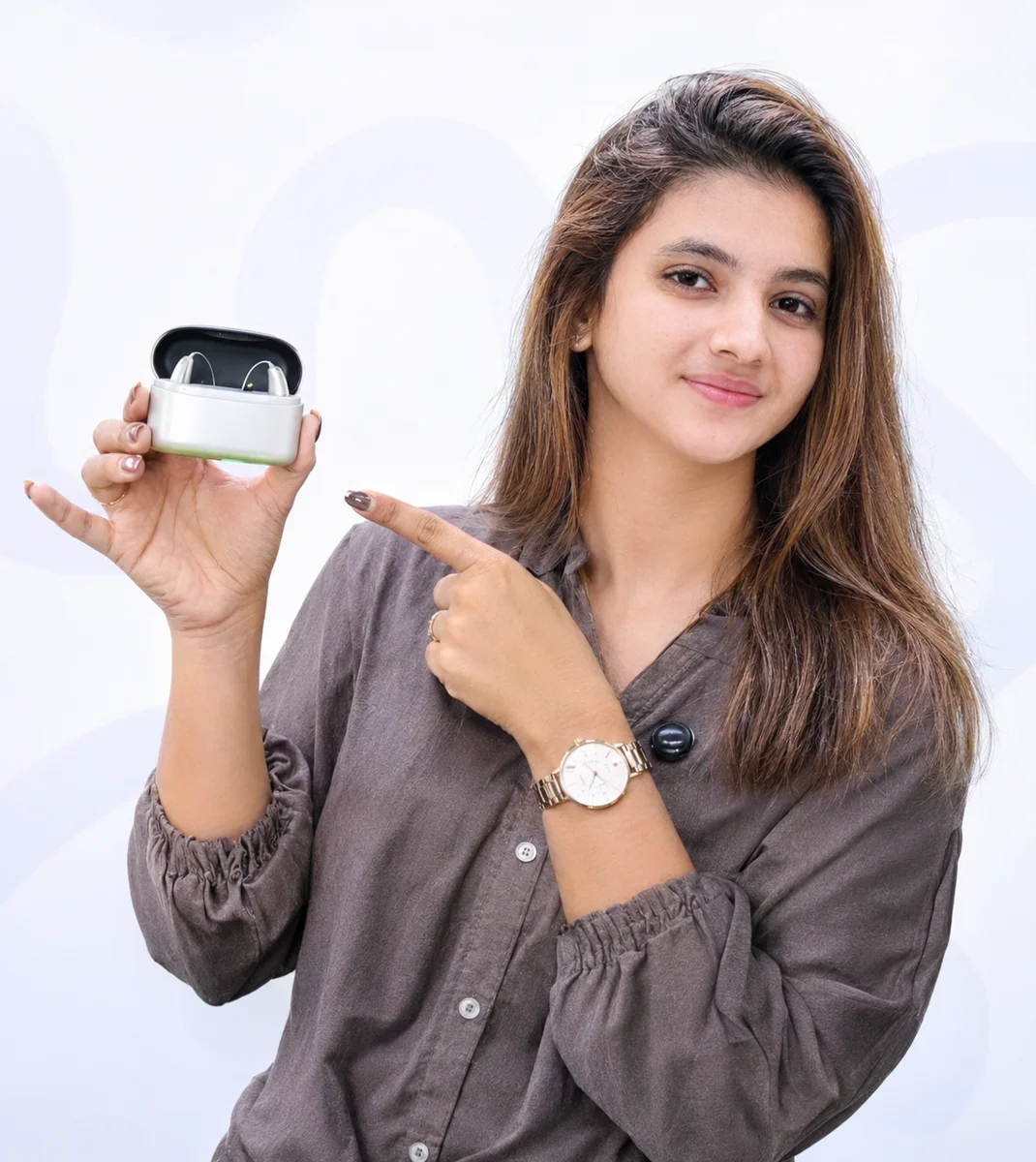
GN Hearing makes ReSound, Beltone and Jabra Enhance hearing aids. It closed the third quarter of 2026 with 5% organic revenue growth, and the launch of the ReSound Sensia platform did much of the lifting. The timing matters. GN Store Nord is preparing to hand its entire hearing healthcare division to Amplifon, with completion targeted for the end of this year.
For readers on hearingaidnearme.in who want to know which manufacturers are shaping the hearing aid market, this quarter is a useful snapshot. It shows where one of the industry’s biggest names stands just before it changes owners.
Third-Quarter Revenue at a Glance
GN’s hearing business reported quarterly revenue of DKK 1.831 billion, about US$274.8 million. That compares with DKK 1.747 billion, or US$262.2 million, in the same quarter last year. The company described the growth as broad-based across regions and sales channels.
The result is more impressive given the starting point. The third quarter of 2025 had already delivered 7% organic growth, so the comparison was demanding. Over the first nine months of 2026, organic revenue growth for the hearing division came in at 4%.
How Analysts Reacted
Analysts at DNB Carnegie and Bernstein both judged the quarter better than expected. They also noted that tariff refunds and other accounting effects shaped reported profitability.
Carnegie analyst Niels Leth said earnings still beat his forecasts after adjusting for those items. He also welcomed clearer details on planned share buybacks once the hearing sale closes. Bernstein’s Suzannah Ludwig and her colleagues said the quarter strengthened their confidence in GN’s full-year outlook. They cautioned that the final quarter would need stronger momentum, especially in the Gaming business. Bernstein also expects hearing growth to continue as the division moves toward Amplifon’s ownership.
The buyer benefited too. Amplifon shares rose more than 5% in early Milan trading after GN’s November 5 report, then gave back some of the gain. Analysts at Equita called the hearing results reassuring and in line with their full-year estimates, according to Reuters.
How GN Compares With Demant and Amplifon
GN’s 5% looks modest next to Demant, which reported 17% growth in external hearing aid revenue. Demant credited Oticon Reveal and continued momentum from Zeal, with gains in both units sold and average selling prices. Demant’s hearing care retail arm grew 6% organically, while Amplifon reported 3.6% organic growth along with better adjusted profitability as its restructuring progressed.
Direct comparisons are tricky, though. These companies differ in business mix, distribution models, product launch timing and prior-year baselines. Demant confirmed its upgraded full-year outlook on November 3, and Amplifon also held its guidance. GN kept its outlook as well, but that outlook now covers only the Enterprise and Gaming units and excludes the hearing business being sold.
Hearing Earnings Jump Sharply
Profitability improved strongly. Adjusted EBITA for the hearing division rose 64% to DKK 396 million (US$59.4 million), up from DKK 241 million (US$36.2 million) a year earlier. The adjusted margin climbed to 21.6% from 13.8%.
Those figures exclude DKK 89 million (US$13.4 million) in one-off costs booked during the quarter after the decision to sell the business. For January through September, the division produced adjusted EBITA of DKK 1.017 billion (US$152.7 million), a 19.0% margin.
On the earnings call, CFO Søren Jelert credited the quarter’s growth to the strong early reception of ReSound Sensia. He said preparations to separate the hearing business were in their final stages. Completion still depends on regulatory approvals and the separation process.
New Hearing Aids Across the Brand Family
The quarter brought a major refresh of GN’s prescription hearing aid range. ReSound Sensia and its Beltone counterpart, Illuminate, began rolling out in the United States, Germany and Austria on August 20, with more markets to follow.
According to GN, the Sensia platform combines three technologies:
environmental sound classification
four-microphone directional beamforming
deep neural network noise reduction
Together they are designed to emphasize the speech a wearer wants to follow while adapting automatically to the surroundings. The family includes receiver-in-ear and custom styles.
Jabra Enhance also joined the launches. On August 18 it introduced the Jabra Enhance Select M Series, a line of over-the-counter hearing aids made up of the M3, M2 and M1. The range adds app-based self-fitting. Customers can take a hearing test through the devices themselves and apply personalized settings.
Purchases made directly from Jabra Enhance and certain resellers include three years of virtual audiology services. That pairs self-adjustment with access to licensed hearing professionals. GN’s quarterly report did not break out Jabra Enhance sales separately, so its contribution remains unclear.
The Amplifon Deal Stays on Track
GN agreed in March to sell its whole hearing business to Amplifon. The deal was initially valued at DKK 17 billion (US$2.552 billion) on a cash-free, debt-free basis. The payment has two parts: DKK 12.6 billion (US$1.891 billion) in cash, subject to closing adjustments, and 56 million Amplifon shares.
The agreement covers the hearing brands, intellectual property, research and development, manufacturing and operations, including the Beltone network. The combination would pair GN’s hearing aid manufacturing strength with Amplifon’s international retail network, which includes Miracle-Ear.
Two recent milestones moved the deal forward. Amplifon shareholders approved the share capital increase reserved for GN on October 29. The European Commission has now cleared the transaction, a significant regulatory step toward the year-end target. That clearance does not complete the acquisition, which still depends on remaining approvals and closing conditions.
GN also sharply lowered its estimate of the upfront tax payment tied to the separation. The new range is DKK 300-500 million (US$45-75 million), down from DKK 1.5-2.0 billion (US$225-300 million). The payment is expected to create an equal tax asset that GN can use against future taxes.
Group Outlook Now Excludes Hearing
Because of the planned sale, GN reports hearing as “discontinued operations,” an accounting label for a business being divested. The group’s headline 2% organic growth and its full-year guidance therefore apply only to the continuing Enterprise and Gaming businesses.
Those units generated quarterly revenue of DKK 2.267 billion (US$340.3 million). Adjusted EBITA reached DKK 413 million (US$62.0 million), helped by DKK 153 million (US$23.0 million) in tariff refunds. GN kept its continuing-operations outlook of 0-3% organic growth and a 9-10% adjusted EBITA margin.
Once the hearing sale completes, GN plans to return at least DKK 4 billion (US$600.4 million) to shareholders by the end of 2027. For the hearing division, the immediate priorities are rolling out the new products and finishing the ownership transition.
What This Means for Hearing Aid Buyers
A change of ownership at this scale can reshape how hearing aids are made, sold and serviced. If you already use ReSound, Beltone or Jabra Enhance, nothing changes today. Warranties, fittings and support continue as usual while the deal closes.
If you are shopping for a new device, it is worth comparing models on their features, fitting support and after-sales care. Newer platforms like Sensia reflect the industry’s shift toward AI-driven speech focus and better noise handling. Availability differs by country, since the first Sensia launches covered only the United States, Germany and Austria. Always check which models are sold locally, and consult a qualified audiologist before choosing a device.
The Bottom Line
GN Hearing’s 5% growth, a sharp rise in adjusted profit and a clearer path to the Amplifon deal make this a strong quarter. Demant grew faster, but GN delivered solid results against a tough comparison and with a major product launch under way. With European Commission clearance in hand and a year-end target, the hearing aid industry is heading toward one of its biggest ownership changes in years.
FAQs
1. How much did GN Hearing grow in Q3 2026?
GN Hearing reported 5% organic revenue growth in the third quarter of 2026, with revenue of DKK 1.831 billion (about US$274.8 million).
2. What drove GN Hearing’s growth this quarter?
Management credited the strong early reception of the ReSound Sensia hearing aid platform, along with broad-based growth across regions and sales channels.
3. Who is buying GN Hearing?
Amplifon agreed to acquire the entire GN Hearing business in a deal initially valued at DKK 17 billion (about US$2.552 billion). It is targeted to close by the end of 2026.
4. Has the Amplifon and GN deal been approved?
The European Commission has cleared it and Amplifon shareholders approved the related share capital increase. Remaining approvals and closing conditions still apply.
5. Which brands does GN Hearing own?
GN Hearing is the business behind ReSound, Beltone and Jabra Enhance hearing aids.
6. Will my current hearing aid be affected by the sale?
There is no announced change for existing users. Warranties and support continue as normal while the transaction closes. Check with your hearing care provider for any updates.
More from this section



Web Stories
More stories › आजी-आजोबांसाठी कोणती आरोग्य मशीन? मार्गदर्शन
 ब्रेकिंग न्यूज: श्रवणयंत्रावर 50% सूट | व्हिआर स्पीच अँड हिअरिंग क्लिनिक, अहिल्यानगर
 Siemens Hearing Aid Guide 2026: Features, Prices, Benefits
 Hearing Aids November 2026: Latest Updates & Price Guide
 Phonak Hearing Aid Latest Update 2026: New EON Series, Features, Price and Availability
 Signia Hearing Aid Latest Update 2026: New MaX AI Hearing Aid, Features and Prices
 Widex Hearing Aid Latest Update 2026: Allure AI & Price
 Oticon Reveal 2026: Dual AI hearing aid, features and price
Reader Comments
Comments are reviewed by our desk before they appear. Sign in with your mobile number to join the discussion.