Hearing Clinic in New York Expert Hearing and Speech Care for Adults 50+
Hearing care in New York for adults 50+. EarMart offers hearing tests, hearing aids, tinnitus support and speech therapy. Book today.


If you keep asking people to repeat themselves, turn the television up a little more each month, or avoid busy restaurants because conversation turns into a blur, it may be time to see a hearing specialist. For adults in New York, especially those aged 50 and over, a professional hearing clinic can turn that frustration into clear, confident communication. At EarMart, hearing care and speech support come together, so you can get answers, treatment and ongoing guidance in one place.
Why Hearing Health Matters More After 50
Hearing changes tend to arrive quietly. Most adults begin to notice difficulty in their fifties or sixties, and national health data shows that roughly one in three adults between 65 and 74 has some degree of hearing loss, rising to nearly half of those over 75. Because the change is gradual, many people adapt without realizing how much they are missing.
Untreated hearing loss rarely stays just a hearing problem. Research has linked it with social withdrawal, fatigue, low mood and a higher risk of cognitive decline. When your brain works overtime to decode muffled speech, less energy is left for memory and concentration. The good news is that early action makes a real difference. People who test early and treat early adjust to hearing devices more easily and keep their social lives and independence intact.
Living in New York adds another layer. Subway platforms, construction, sirens and crowded restaurants expose city residents to loud sound for years, and they also make hearing difficulty far more noticeable in daily life.
Signs You May Need a Hearing Test in New York
Hearing loss is easy to dismiss, so it helps to know what to look for. Consider booking a hearing test if you notice any of the following:
You often ask people to repeat themselves
Conversations are hard to follow in restaurants, on trains or at family gatherings
Other people seem to mumble
You turn up the TV, radio or phone volume more than before
Phone calls are harder to understand
You hear ringing, buzzing or hissing in your ears
Long conversations leave you unusually tired
You miss doorbells, alarms or high-pitched sounds
If two or more of these sound familiar, a hearing evaluation is a sensible next step. The test is quick and painless, and it gives you a clear baseline even when the result turns out to be normal.
What Happens During a Hearing Evaluation
A comprehensive hearing evaluation is more than a series of beeps. Here is what you can usually expect:
Case history: Your clinician asks about your hearing concerns, medical history, medications, noise exposure and the situations where you struggle most.
Ear examination: The ear canal and eardrum are checked for earwax, infection or anything else that could affect hearing.
Pure-tone testing: You listen to soft tones at different pitches through headphones. This maps which frequencies you hear well and which you miss.
Speech testing: Understanding words in quiet and in background noise often reveals more about real-world hearing than tones alone.
Results and plan: Your clinician explains your results in plain language, shows you your audiogram and discusses options, from simple monitoring to hearing aids or a medical referral.
Most evaluations take under an hour, and you leave with a clear next step rather than a pile of confusing numbers.
Hearing Aids in New York: Finding the Right Fit
Hearing aids have changed dramatically. Today’s devices are small, discreet and full of useful features, including Bluetooth streaming from your phone, rechargeable batteries, noise management and directional microphones that help in crowded places.
Since the FDA created a category of over-the-counter hearing aids for adults with perceived mild to moderate hearing loss, more people ask whether they should simply buy a device themselves. Over-the-counter options can suit some people, but a professional evaluation still matters. Without a proper test you may not know the type or degree of your hearing loss, whether a medical condition is involved, or whether you need a higher level of support. A clinic also provides custom fitting, programming for your lifestyle and follow-up adjustments, which is where much of the long-term success happens.
At EarMart, the goal is a solution that fits your ears, your budget, your routine and your communication needs. Expect time to compare options, learn how to use and care for your devices, and return for fine-tuning as your brain adjusts to sounds it has been missing. Adapting usually takes a few weeks, and guided support makes that period much smoother.
Tinnitus, Earwax and Other Common Concerns
Hearing care is not only about hearing aids. Many adults visit a clinic for ringing in the ears, a feeling of fullness, earwax buildup or changes in hearing. Tinnitus is especially common after 50 and can be linked to hearing loss, noise exposure, stress or certain medications. It is rarely a sign of something dangerous, but persistent ringing deserves a proper evaluation. Management options may include sound therapy, counseling, hearing devices that provide masking sound, and strategies to improve sleep and reduce stress.
A sudden drop in hearing in one or both ears is different. It needs urgent medical attention, ideally within a day or two, so do not wait for a routine appointment.
Speech Therapy and Communication Support
Hearing and speech are closely connected. Changes in hearing can affect how clearly a person speaks, how confidently they join conversations and how well they follow what others say. A clinic that brings both disciplines together treats communication as a whole.
Speech and language support can help children with delayed speech, adults recovering from stroke or illness, and anyone who wants to improve voice, clarity or comprehension. Communication strategies, such as using visual cues, choosing a good seat in a room and asking others to rephrase, also help hearing aid users get more from their devices. Families benefit too. Learning to face the listener, speak clearly and reduce background noise makes everyday conversations easier for everyone.
Protecting Your Hearing in a Loud City
Prevention counts at any age. A few practical habits go a long way:
Wear earplugs or noise-reducing earmuffs at concerts, clubs and construction sites
Keep headphone volume moderate and take listening breaks, a common guideline being no more than 60 percent volume for 60 minutes at a time
Choose noise-canceling headphones so you do not need to raise the volume over subway noise
Get a baseline hearing test and repeat it every one to three years after age 50
Never use cotton swabs or sharp objects to clean your ears
Why Choose EarMart
Choosing a hearing clinic is a personal decision. People value a team that listens first, explains clearly and stays with them after the first visit. EarMart is built around that approach:
Unhurried appointments where your questions get real answers
Evaluations that look at how you hear in everyday situations, not only in a quiet booth
Honest guidance on whether you need hearing aids, a medical referral or simple monitoring
Combined hearing and speech expertise for complete communication care
Follow-up visits for adjustments, cleaning and progress checks
Whether this is your first hearing test or you are replacing older devices, the team meets you where you are.
Book Your Hearing Appointment in New York
Hearing rarely improves on its own, and waiting seldom makes things easier. An appointment at EarMart gives you a clear picture of your hearing health and a plan you can trust. Contact the clinic today to schedule your hearing evaluation and take the first step toward richer conversations and more confident living in the city.
Frequently Asked Questions
How often should adults over 50 get a hearing test in New York?
Many hearing health professionals recommend a baseline test around age 50 and a repeat every one to three years. Test sooner if you notice changes in your hearing or develop ringing in your ears.
How do I know if I need hearing aids?
Only a hearing evaluation can tell you. The test shows the type and degree of your hearing loss and how well you understand speech, which helps your clinician recommend the right level of support.
Are over-the-counter hearing aids as good as clinic-fitted devices?
Over-the-counter devices can help some adults with mild to moderate loss. Clinic-fitted devices offer a professional test, custom programming and follow-up care, which often leads to better comfort and results.
Can tinnitus be cured? Not always, but it can usually be managed. Sound therapy, counseling, hearing devices and stress-reduction strategies can make tinnitus far less noticeable and disruptive.
Does EarMart offer speech therapy as well as hearing care?
Yes. The clinic brings hearing and speech support together, so communication needs can be addressed in one place.
What should I bring to my first appointment?
Bring a list of your medications, any previous hearing test results, your current hearing devices if you have them, and a family member or friend who can describe the hearing difficulties they notice.
More from this section

Hearing Aids November 2026: Latest Updates & Price Guide

किशोरवयीन मुलांसाठी सर्वोत्तम IIC श्रवणयंत्र भारतात 2027 – किंमत, मॉडेल्स आणि पालकांसाठी संपूर्ण मार्गदर्शक

ज्येष्ठ नागरिकांसाठी सर्वोत्तम CIC श्रवणयंत्र 2027 – किंमत व रिव्ह्यू

स्टारकी हिअरिंग एड किंमत 2027 | ज्येष्ठ नागरिकांसाठी सर्वोत्तम मॉडेल
Web Stories
More stories › आजी-आजोबांसाठी कोणती आरोग्य मशीन? मार्गदर्शन
 ब्रेकिंग न्यूज: श्रवणयंत्रावर 50% सूट | व्हिआर स्पीच अँड हिअरिंग क्लिनिक, अहिल्यानगर
 Hearing Aids November 2026: Latest Updates & Price Guide
 Siemens Hearing Aid Guide 2026: Features, Prices, Benefits
 Phonak Hearing Aid Latest Update 2026: New EON Series, Features, Price and Availability
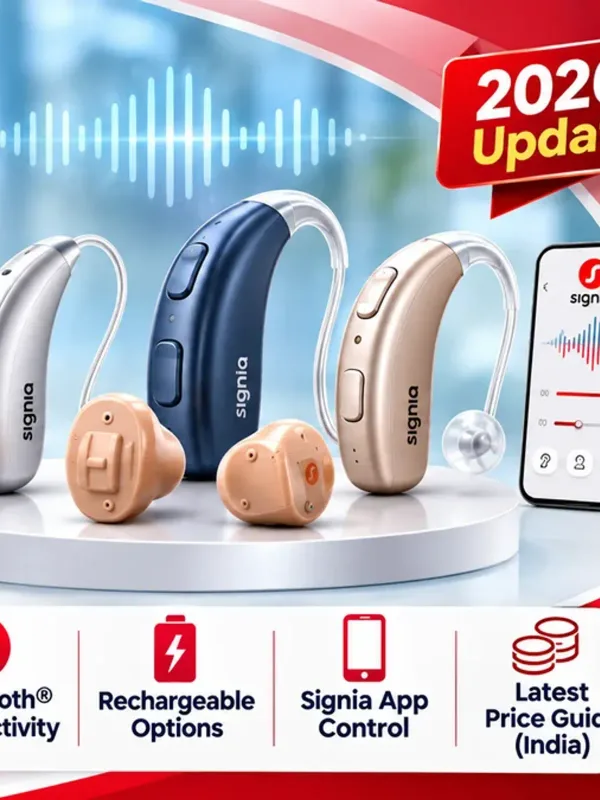 Signia Hearing Aid Latest Update 2026: New MaX AI Hearing Aid, Features and Prices
 Widex Hearing Aid Latest Update 2026: Allure AI & Price
 Oticon Reveal 2026: Dual AI hearing aid, features and price
Reader Comments
Comments are reviewed by our desk before they appear. Sign in with your mobile number to join the discussion.