9 Hearing Aid Tips Audiologists Want You to Know
Thinking about hearing aids? Learn what audiologists want you to know: early testing, proper fitting, adjustment tips and how families can help.
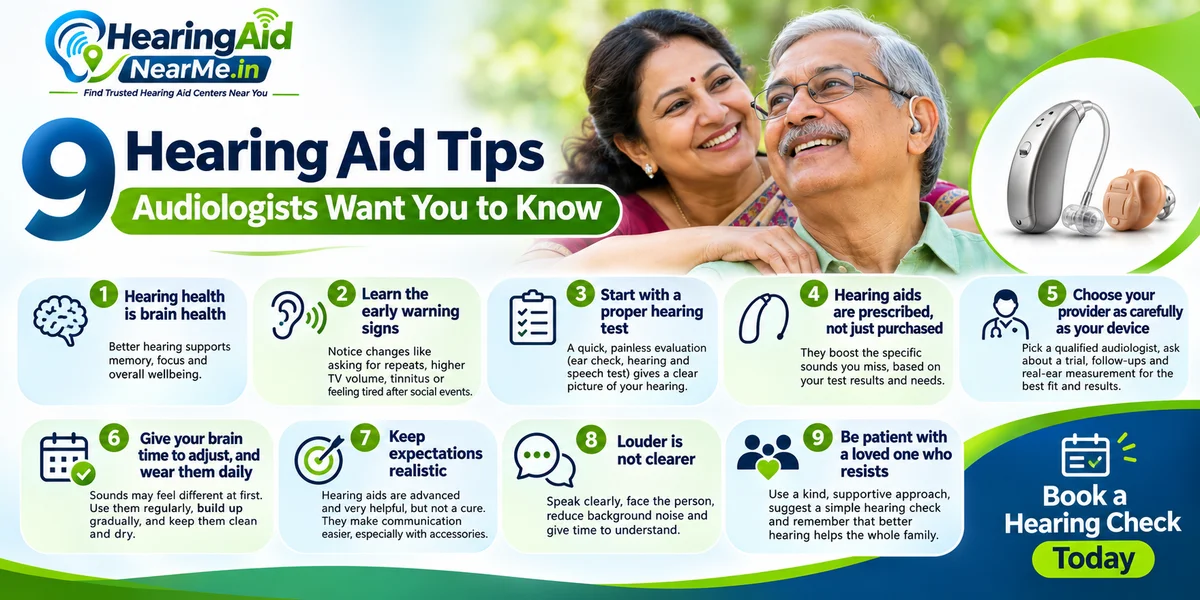
- Untreated hearing loss is linked to memory problems, low mood and social withdrawal, so it is a health issue, not just a matter of age or looks.
- A hearing test is the right first step. Buying a device without one is guesswork.
- Hearing aids must be programmed for your specific hearing pattern and fine-tuned over several visits.
- The provider matters as much as the device. Ask about qualifications, trial periods, follow-up care and ear-canal verification.
- Wear your hearing aids every day. The brain needs steady practice to adapt.
- Hearing aids improve hearing but do not restore it to normal.
Hearing Aids: 9 Things Audiologists Want Every Family to Know
Many people delay getting hearing aids because they worry the devices will make them look older. Audiologists see it the other way. Staying connected to conversations, family gatherings and daily life is what keeps people active and sharp. If you or someone you love is struggling to follow conversations, these are the points worth knowing before you take the next step.
1. Hearing health is brain health
Hearing happens in the ears, but understanding happens in the brain. When sounds arrive faint or unclear, the brain spends extra effort filling in the gaps, which leaves less energy for memory and attention. Research has linked untreated hearing loss with faster cognitive decline, loneliness and low mood. That is why hearing care is now seen as part of overall wellbeing and not a cosmetic choice. It also affects younger adults, especially those who work in noisy environments or spend long hours with headphones on.
2. Learn the early warning signs
Hearing loss usually creeps in slowly, so many people adapt without noticing. Common signs include:
Asking people to repeat themselves often
Turning up the TV or phone volume higher than others prefer
Struggling to follow conversations in groups or restaurants
Hearing people speak but not understanding the words
Ringing or buzzing in the ears (tinnitus)
Feeling unusually tired after social events
Often it is a family member who notices first. If several of these sound familiar, book a hearing check.
3. Start with a proper hearing test
A hearing evaluation is quick, painless and tells you far more than guessing. An audiologist will usually examine your ear canals, check for wax or infection, measure the softest sounds you can hear at different pitches and test how well you understand speech. The result is a chart of your hearing, called an audiogram, which guides every decision that follows. Some causes of hearing trouble, such as blocked wax or a middle-ear problem, can be treated without any device at all.
4. Hearing aids are prescribed, not just purchased
Hearing loss is rarely even across all pitches. Many people lose high-pitched sounds first, so speech sounds muffled even when volume seems fine. A well-fitted hearing aid does not simply make everything louder. It boosts the specific pitches you are missing and leaves the rest alone. This programming is based on your test results and adjusted again as you get used to the device. Choosing a model off a shelf or online without testing often leads to disappointment.
5. Choose your provider as carefully as your device
The same hearing aid can perform very differently depending on how well it is fitted. Before you commit, ask:
Is the audiologist qualified and registered with the proper authority?
Is there a trial period so you can test the device in real life?
Are follow-up visits and adjustments included?
Do they check the settings with real-ear measurement, which measures the sound reaching your ear canal while you wear the device?
Real-ear measurement confirms the hearing aid is delivering what was prescribed. Not every clinic offers it, so it is a good question to ask.
6. Give your brain time to adjust, and wear them daily
New hearing aids rarely feel perfect on day one. Everyday sounds like fans, footsteps, running water and traffic may seem sharp or intrusive after years of quiet. Your own voice may sound different too. This is normal, and it improves as the brain relearns how to process sound. The most common mistake is wearing the devices only now and then. Regular daily use, starting with a few hours and building up, helps you adapt faster. Go back for fine-tuning whenever something feels uncomfortable.
Daily care also matters. Wipe the devices with a dry cloth, keep them away from moisture, and store them in a drying case, especially during the monsoon or in humid weather. Replace batteries or charge them on a routine, and keep wax filters clean.
7. Keep expectations realistic
Modern hearing aids are advanced. Many reduce background noise, adjust automatically to different settings and connect to phones and TVs by Bluetooth. Even so, they do not give you perfect hearing. Noisy places such as weddings, markets and restaurants will still be challenging. A hearing aid is best thought of as a powerful support tool that makes communication easier, not a cure. Accessories such as TV streamers and remote microphones can help in tougher situations.
8. Louder is not clearer
People with hearing loss often say, "I can hear you, but I can't understand you." That happens because hearing loss affects clarity as well as loudness. Shouting raises volume but does little for clarity, and it can sound harsh or upsetting. If you are speaking with someone who wears hearing aids:
Get their attention before you begin speaking.
Face them so they can see your lips and expressions.
Rephrase with different words instead of repeating the same sentence.
Switch off the TV or move away from noise.
Speak at a natural pace and give them a moment to process.
Avoid talking from another room.
Please also avoid asking whether they are wearing their hearing aids. If they are, they are already doing their best.
9. Be patient with a loved one who resists
Many people refuse hearing help because of denial, cost worries or fear of stigma. Repeated pressure usually makes them dig in. A gentler approach works better: suggest a simple hearing check instead of "getting hearing aids," and offer to go along. Mention specific moments, such as a missed doorbell or a misheard question, without blaming them. Remember too that hearing loss affects the whole family. Partners and children often feel shut out when conversations keep breaking down. Treating hearing loss helps everyone in the household feel closer.
Final thoughts
Good hearing care means testing early, getting a proper fit, wearing the devices consistently and having supportive people around you. If you are looking for expert help, Hearing Aid Near Me can help you find qualified audiologists and clinics so you can start with a proper hearing test and an honest conversation about your options.
This article is for general information and does not replace advice from a qualified audiologist or doctor.
FAQs
1. At what age should I get my hearing checked?
Hearing loss can happen at any age. Adults should consider a baseline test around the mid-fifties and an annual check after 65, or sooner if they notice symptoms, have tinnitus or work in loud environments.
2. Can hearing aids slow memory decline?
Hearing aids cannot cure memory problems, but research suggests that treating hearing loss may support better communication, social activity and brain engagement. Speak with your doctor about any memory concerns.
3. Why do my new hearing aids sound strange?
After a long period of reduced hearing, the brain needs time to adapt to sounds it has been missing. Wearing the devices daily and returning for adjustments usually makes them more comfortable within a few weeks.
4. Do hearing aids make hearing completely normal?
No. They improve access to sound and speech but cannot repair the damage in the ear. Noisy places may still be difficult, and an audiologist can suggest ways to improve them.
5. Is it safe to buy hearing aids without a hearing test?
It is not recommended. Without a test, the device may be set incorrectly, and a treatable medical cause of your hearing trouble could be missed.
6. How can I talk to a family member who refuses to get hearing aids?
Suggest a basic hearing check instead of a device, go with them, and point out specific situations calmly and without blame. Avoid repeated pressure.
7. How should I look after my hearing aids?
Clean them daily with a dry cloth, keep them dry, store them in a drying box in humid weather, replace filters as advised and attend regular check-ups.
8. What should I ask before choosing a hearing aid clinic?
Ask about the audiologist's qualifications, the trial period, follow-up care, warranty and whether they verify the fitting with real-ear measurement.
More from this section


Web Stories
More stories › कान में खुजली: कारण, सुरक्षित उपाय और डॉक्टर की सलाह
 iPhone 18 Still Has No Auracast: Hearing Aid Impact
 कान में सनसनाहट (टिनिटस): कारण, इलाज और राहत के उपाय
 कानात दडे बसणे: कारणे, लक्षणे आणि उपचार
 Flysound Comfort Pro: OTC AI hearing aid with remote mic
 Nuance Audio Plus: New Hearing Glasses Explained
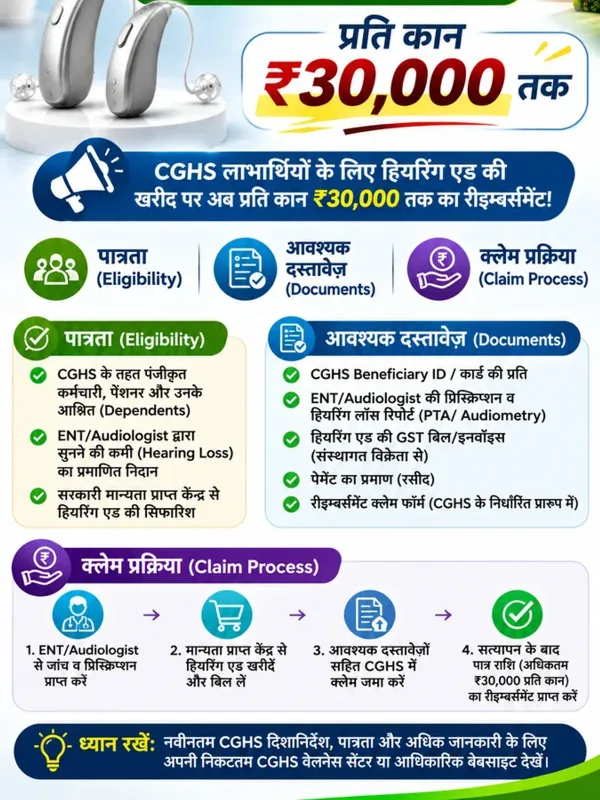 CGHS हियरिंग एड रीइम्बर्समेंट 2026: प्रति कान ₹30,000 तक, पात्रता, दस्तावेज़ और क्लेम प्रक्रिया
 Widex Allure AI RIC Explained: What On-Demand AI Hearing Aids Mean for Buyers in India
 आजी-आजोबांसाठी कोणती आरोग्य मशीन? मार्गदर्शन
 ब्रेकिंग न्यूज: श्रवणयंत्रावर 50% सूट | व्हिआर स्पीच अँड हिअरिंग क्लिनिक, अहिल्यानगर
Reader Comments
Comments are reviewed by our desk before they appear. Sign in with your mobile number to join the discussion.