AI Hearing Aids 2026: Audiology Devices Market to Hit $15.06 Billion
AI chips are changing hearing aids. See how Phonak EON, Oticon Reveal and Omega AI+ are driving the $15.06 billion audiology devices market, and what it means for buyers.


- The global audiology devices market was worth USD 9.67 billion in 2023 and is projected to reach USD 15.06 billion by 2030 at a 6.5% CAGR
- Phonak EON, Oticon Reveal and Starkey Omega AI+ all put dedicated AI processors inside the hearing aid
- Samsung, Meta and Apple now offer FDA-cleared hearing features for mild to moderate hearing loss
- Amplifon’s acquisition of GN’s hearing business has cleared every regulatory approval and is expected to close by December 31, 2026
- Cochlear implant units grew 5% in FY26, but implant revenue stayed flat in constant currency
- Asia-Pacific is the fastest-growing region for Sonova, which matters for Indian buyers
AI Chips in Hearing Aids: How Phonak EON, Oticon Reveal and Omega AI+ Are Reshaping the Audiology Devices Market in 2026
Hearing aids are no longer just small amplifiers. In 2026 they have become compact, AI-powered computers worn in the ear. Recent company results show the audiology devices market moving from a patchy few years into a strong product cycle driven by artificial intelligence.
According to Next Move Strategy Consulting, the global audiology devices market was valued at USD 9.67 billion in 2023. It is expected to reach USD 15.06 billion by 2030, a CAGR of 6.5% between 2024 and 2030. That is growth of roughly USD 5.39 billion in seven years. For anyone searching for a hearing aid near them, this growth explains why better, smarter devices are arriving so quickly.
The AI Platform Race in Hearing Aids
Phonak EON
Phonak launched EON in August 2026, the third generation of Sonova’s real-time AI hearing aids. It is built around a new chip called HYPERSONIC. Sonova’s research head said the device is smaller and lighter, makes speech much easier to understand and reduces listening effort. In its half-year results, Sonova reported that EON is performing above expectations. Hearing instruments sales rose 9% in local currencies to CHF 1,716.7 million.
Oticon Reveal
Demant, the parent company of Oticon, introduced Oticon Reveal as its Dual AI hearing aid. It processes speech and surrounding sounds separately, so the wearer hears conversation clearly while still staying aware of the environment. Demant reported 17% organic growth in hearing aids in the third quarter and raised its 2026 outlook twice during the year.
Starkey Omega AI+
Starkey unveiled Omega AI+ in October 2026. It runs on a Quad DNN neural processor, supports Auracast broadcast audio and adds sleep quality tracking. This shows how hearing aids are becoming multifunction wearables that handle hearing, connectivity and wellness together.
The Signia Pure C&G MaX platform, which uses four neural networks, joined Phonak EON and Oticon Reveal in becoming available through the US Veterans Affairs channel in November.
What this means for you: AI processing is now the standard in premium hearing aids. The real differences between brands lie in battery efficiency, sound quality in noise, comfort and the quality of the fitting you receive.
Cochlear Implants: More Units, Pressure on Prices
Cochlear Limited reported a 5% rise in implant units to 56,692 in FY26. The Nucleus Nexa System, a smart implant with upgradeable firmware, now accounts for more than 95% of implant sales in developed markets. Even so, implant revenue was flat in constant currency. A larger share of lower-priced units from emerging markets pulled the average down. China’s volume-based procurement and surgery backlogs in parts of Europe added further pressure.
For families considering implants, the takeaway is that technology keeps improving, but access and pricing depend heavily on the country and the reimbursement system.
Consumer Tech Enters the Hearing Market
Big technology brands are competing for people with mild to moderate hearing loss:
Samsung: Its Galaxy Buds hearing aid feature received FDA clearance as an over-the-counter hearing aid for adults aged 18 and above, with a US rollout planned for the fourth quarter of 2026.
Meta: The FDA cleared its Hearing assist software for smart glasses in July 2026, with a software upgrade priced at USD 149.99.
Apple: The AirPods Pro Hearing Aid feature, first authorized in 2024, expanded to five Canadian provinces in October 2026.
These products widen the entry point to hearing care. However, Demant’s unit data shows no sign yet that they are replacing clinic-fitted devices. Global hearing aid unit growth actually accelerated from 3% in the second quarter to 6% in the third. The larger risk is price anchoring, because a USD 149.99 software feature makes some people question why a professional hearing aid costs more.
Three Trends Shaping the Market
AI is now the baseline. Neural processing has moved from a premium extra to a basic expectation. The competition is now about how efficiently the chip runs inside a tiny, battery-limited device.
Consumer devices grow the funnel. They introduce more people to hearing support, and many will eventually need a professional assessment.
The fitting channel is the real prize. Amplifon is acquiring GN’s hearing business, Demant has expanded its retail presence, and Sonova plans to invest CHF 80 million to CHF 100 million in retail each year. As self-fitting spreads, the professional relationship becomes the scarce asset.
Regional Picture: Where India Fits
North America remains the largest region. Sonova’s North American sales were CHF 654.3 million, 36% of group sales, growing 7.5%. Asia-Pacific is smaller at 10% of sales but grew fastest at 11.4%. This points to rising demand across Asia, including India, where awareness of hearing loss and willingness to buy advanced devices are both increasing.
Regulation, Consolidation and Trade
Regulation. The FDA’s software pathway lets manufacturers update features after clearance within agreed limits. This helps consumer electronics brands release hearing improvements as frequent software updates.
Consolidation. Amplifon and GN confirmed on November 6, 2026 that all regulatory approvals are in place, with closing expected by December 31, 2026. The deal was valued at DKK 17.0 billion. Meanwhile, Sonova is selling its consumer hearing business, and Demant has committed to at least DKK 3 billion in share buybacks.
Trade. Demant and GN both expect refunds of previously paid US tariffs, which is helping 2026 earnings.
Strengths and Concerns
On the positive side, hearing aid market value growth accelerated to around 7% in the third quarter, and Sonova’s gross margin rose to 74.4%. Access is widening as consumer devices gain approval.
On the cautious side, US managed care volumes continue to decline. The FDA clearances cover only perceived mild to moderate loss. Connected devices also carry cybersecurity risk, and WS Audiology investigated an IT security incident in November 2026.
Outlook to 2030
Sonova now expects 6% to 8% sales growth in 2026/27, Demant guides to 7% to 8% organic growth for 2026, and Cochlear expects low single-digit growth in FY27. Market estimates differ because NextMSC’s forecast covers a wider range of devices than hearing aids alone. Near-term events to watch include the Amplifon and GN closing, the Samsung rollout and Starkey’s CES 2027 Innovation Awards recognition for Omega AI+.
What Hearing Aid Buyers Should Do
Get a proper hearing test first. A professional evaluation shows the type and degree of your loss and tells you whether an over-the-counter option or a prescription device suits you.
Compare platforms, not just brand names. Ask about battery life, rechargeability, performance in noise and connectivity.
Value the fitting and follow-up. The best AI chip delivers little without careful programming and regular adjustments by an audiologist.
Look after your data. Use official apps, keep software updated and ask your clinic how patient data is handled.
Plan for the long term. Ask about warranty, servicing and trial periods before you buy.
Conclusion
AI chips, consumer entrants and industry consolidation are redefining the audiology devices market. The projected USD 15.06 billion by 2030 looks achievable given the direction of company guidance and product launches. For patients, the future is better hearing technology, but the person who fits it still makes the biggest difference. If you notice trouble following conversations, a professional hearing assessment is the right first step.
FAQs
1. How big is the global audiology devices market?
It was valued at USD 9.67 billion in 2023 and is projected to reach USD 15.06 billion by 2030, growing at a 6.5% CAGR from 2024 to 2030.
2. What is an AI hearing aid?
It is a hearing aid with a dedicated processor that uses neural networks to separate speech from background noise and adapt to your surroundings in real time.
3. What makes Phonak EON different?
It is Sonova’s third-generation real-time AI hearing aid, built around the HYPERSONIC chip. It is smaller and lighter and aims to improve speech understanding while reducing listening effort.
4. What is Oticon Reveal’s Dual AI?
It processes speech and contextual sounds separately, so you can follow conversations while staying aware of your environment.
5. Will earbuds like AirPods or Galaxy Buds replace hearing aids?
Not for most people. They are cleared only for adults with perceived mild to moderate loss, and current unit data shows clinic-fitted hearing aids still growing.
6. Why is Asia-Pacific important for hearing aids?
It is the fastest-growing region for Sonova, at 11.4% in local currencies, as awareness and access improve.
7. Do I still need a hearing test if I use a consumer hearing feature?
Yes. A test identifies the type and degree of loss, and some conditions need medical attention rather than amplification.
8. Are cochlear implants getting cheaper?
Unit volumes are rising, but average prices vary by market and reimbursement system, and mix changes in emerging markets are putting pressure on revenue.
More from this section

CGHS हियरिंग एड रीइम्बर्समेंट 2026: प्रति कान ₹30,000 तक, पात्रता, दस्तावेज़ और क्लेम प्रक्रिया
MDHearing MD Coach App: AI Hearing Aid Support With Tuned

LISSUN Raises $2.5 Mn Pre-Series A Funding Led by RPSG Capital Ventures

Swastikka Hearing Solution: Best Hearing Aids Centre in Aundh, Pune
Web Stories
More stories ›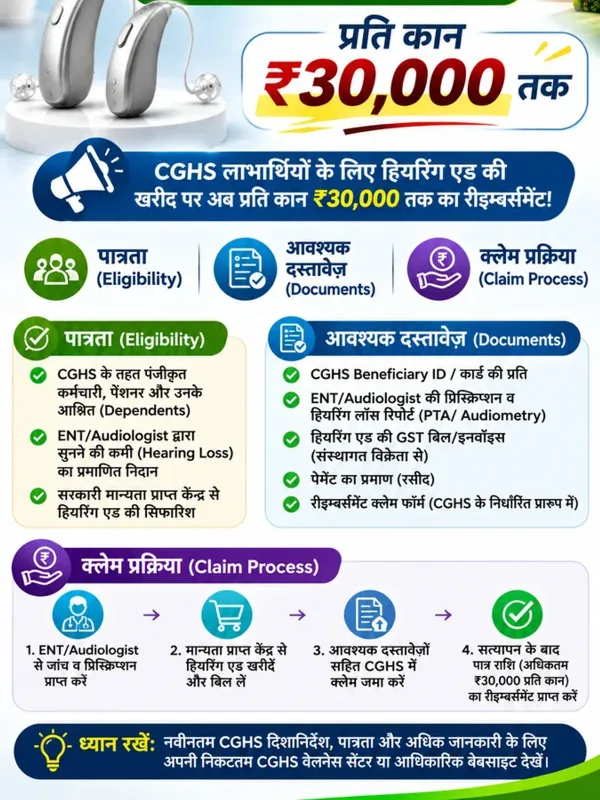 CGHS हियरिंग एड रीइम्बर्समेंट 2026: प्रति कान ₹30,000 तक, पात्रता, दस्तावेज़ और क्लेम प्रक्रिया
 Widex Allure AI RIC Explained: What On-Demand AI Hearing Aids Mean for Buyers in India
 Earkart US FDA Registration: What It Means for You
 आजी-आजोबांसाठी कोणती आरोग्य मशीन? मार्गदर्शन
 ब्रेकिंग न्यूज: श्रवणयंत्रावर 50% सूट | व्हिआर स्पीच अँड हिअरिंग क्लिनिक, अहिल्यानगर
 Hearing Aids November 2026: Latest Updates & Price Guide
 Oticon Hearing Aids Discontinued in India: Full List 2026
 Siemens Hearing Aid Guide 2026: Features, Prices, Benefits
 Phonak Hearing Aid Latest Update 2026: New EON Series, Features, Price and Availability
 Signia Hearing Aid Latest Update 2026: New MaX AI Hearing Aid, Features and Prices
Reader Comments
Comments are reviewed by our desk before they appear. Sign in with your mobile number to join the discussion.