MDHearing MD Coach App: AI Hearing Aid Support With Tuned
MDHearing has launched MD Coach, an AI-powered app built with Tuned. It offers 24/7 support, guided onboarding and licensed professional help for new OTC hearing aid users.

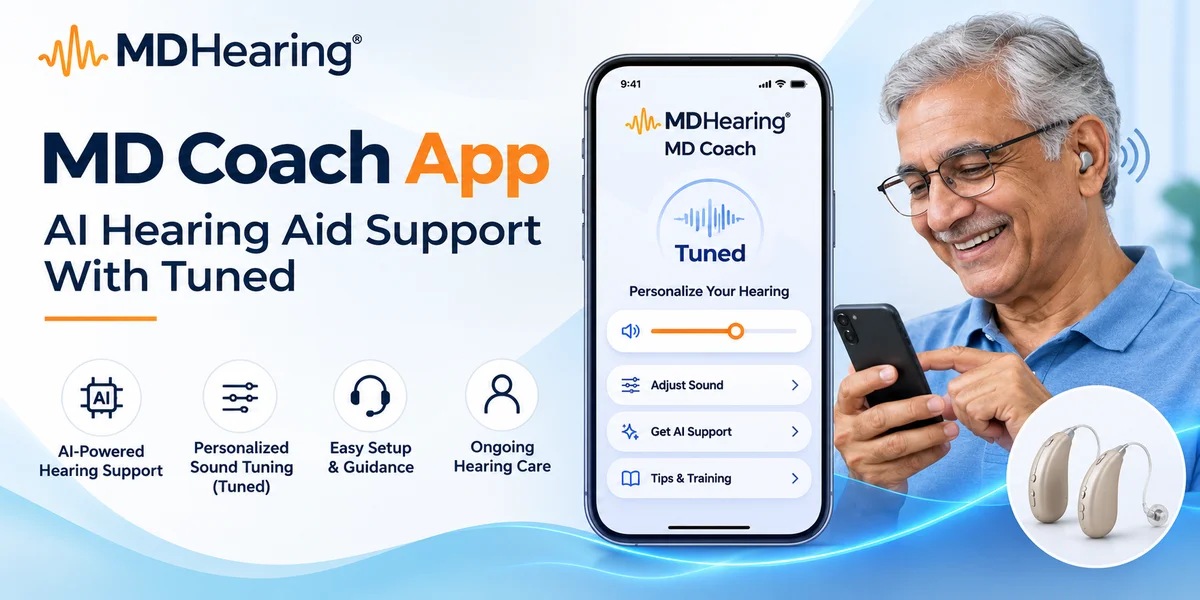
- MDHearing, a Chicago-based OTC hearing aid company, has launched MD Coach, an AI-powered companion app.
- The app was built in partnership with hearing-care technology company Tuned.
- MD Coach is available on the App Store, Google Play and on the web at start.mdhearing.com.
- It gives new users short daily lessons, model-specific videos and 24/7 AI support.
- US-based licensed hearing professionals step in when a case needs a human.
- Proactive check-ins help MDHearing’s team reach struggling users before they return their devices.
MDHearing Launches MD Coach: An AI-Powered Hearing Aid Support App Built With Tuned
Starting to wear a hearing aid sounds simple. You put the device in, switch it on and expect the world to sound clearer. In practice, the first few weeks are often the hardest. Footsteps sound sharp, your own voice feels strange, and questions about fit, charging or pairing pop up at the worst times. Many people give up before their brain has had a chance to adjust.
A new announcement from the over-the-counter hearing aid market tries to fix exactly this problem. MDHearing, a Chicago-based OTC hearing aid company, has partnered with hearing-care technology company Tuned to launch MD Coach, an AI-powered companion app for new hearing aid users. Here is what the app does, why it matters and what it could mean for the wider hearing care industry.
What Is the MD Coach App?
MD Coach is a companion app designed to guide new hearing aid users through the critical early weeks of using their devices. It is available now to MDHearing customers on the App Store and Google Play. It also works on the web at start.mdhearing.com.
The app gives users step-by-step onboarding guidance and links them directly to MDHearing’s hearing care and customer support teams. Instead of leaving a customer alone with a box and a manual, the company is building a guided experience around the device.
Why Early Abandonment Is a Big Problem
One of the biggest challenges in OTC hearing care is early abandonment. New users often report the same frustrations in the first days and weeks:
Everyday sounds feel too loud.
Their own voice sounds unfamiliar or boomy.
Fit and comfort issues make daily wear unpleasant.
These reactions are normal. The brain needs time to relearn sounds it has not heard clearly for years. However, without guidance, many people assume the device is faulty or not right for them. The result is a return, a refund and another person who goes without help for hearing loss.
MD Coach is built to reduce this drop-off by supporting users at the moment they are most likely to quit.
Key Features of MD Coach
The app combines education, instant answers and human backup. At launch, it is designed to help customers in four ways.
Acclimate faster. Short daily lessons explain common early experiences, such as noticing footsteps more or hearing your own voice differently. When people know these things are normal, they are more likely to keep wearing the devices.
Get answers on demand. AI support is available at any hour. When a case needs a person, US-based licensed hearing professionals are available to help.
Build confidence. The app offers simple guidance on fit, comfort, charging and cleaning. Model-specific instructional videos show users exactly how to handle their own device.
Stay connected. Regular check-ins let MDHearing’s team spot users who are struggling. The team can then step in before the customer considers returning the hearing aids.
AI as a Support Layer, Not a Replacement
A stated priority of the partnership is using AI to support human care rather than replace it. Routine questions and basic troubleshooting are handled digitally. That frees MDHearing’s customer service representatives, hearing instrument specialists and audiologists to spend more time on customers who need personal attention.
Jennifer Trainor McDermott, CEO of MDHearing, said the company believes affordable hearing aids should not mean compromising on quality, service or support. She added that when technology can solve a problem immediately, it should, and when a customer needs a person, the company wants to make that connection easier. In her words, technology should make hearing care more personal, not less.
This balance matters. Hearing care is deeply personal, and no chatbot can fully replace a trained audiologist. But many everyday questions do not need a clinician, and quick answers can prevent small problems from turning into big frustrations.
What the Data From Tuned Shows
Tuned’s platform already supports thousands of hearing aid users across clinics and providers in Europe. With MDHearing, it now reaches users in the United States as well. Across these deployments, the company reports two useful numbers:
Around 7 in 10 support conversations are resolved inside the app without a hand-off to staff.
More than a quarter of conversations take place outside business hours.
The most common questions are about connecting hearing aids to a phone or TV, and about cleaning and everyday care.
Omri Gavish, CEO and co-founder of Tuned, explained why this timing matters. Most hearing aid questions are not complicated, he said, but they often come up at nine in the evening when nobody is available to answer. That is the moment a new user decides whether to keep going.
What Comes Next for MDHearing and Tuned
The first rollout covers MDHearing’s current hearing aid lineup and connects with the company’s existing customer support systems. As MDHearing introduces its next generation of connected hearing aids, the partnership is expected to grow to include:
Device connectivity
Self-fitting
Remote care capabilities
MDHearing is also exploring ways to bring connected hearing technology to its direct-to-consumer, commercial, institutional and healthcare partnership channels. The company earlier partnered with InComm Healthcare to offer hearing aids as health plan benefits, which points to a wider push into institutional and payer markets.
There is another benefit for the company. The partnership gives MDHearing better visibility into common onboarding problems and support needs. It plans to use these insights to improve its products, education and customer service over time.
Why This Matters for Hearing Aid Users in India
OTC hearing aids are still a new idea in India, but the lesson from this launch applies everywhere. A hearing aid is not just a product you buy. It is a process you go through, and the first month decides whether the device becomes part of daily life or ends up in a drawer.
If you are buying a hearing aid in India, whether it is a basic device or an advanced rechargeable model, look for support after the sale. Ask these questions before you buy:
Will someone teach me how to use and clean the device?
Is there a trial period so I can adjust gradually?
Can I get follow-up fittings and adjustments if something feels wrong?
Who do I contact when the device stops pairing with my phone?
Apps and AI tools can help with simple questions, but a proper hearing test and a professional fitting remain the foundation of good hearing care. If you are experiencing hearing difficulty, it is best to get your hearing checked by a qualified audiologist before choosing a device.
Tips for New Hearing Aid Users
Whether or not you use an app like MD Coach, these habits can make the early weeks easier:
Wear your hearing aids for a few hours each day at first and increase the time slowly.
Start in quiet places, then move to busier environments as you get comfortable.
Read aloud or talk to yourself to get used to your own voice.
Clean your devices every day and store them safely.
Keep a short note of any problems and share it with your audiologist.
Do not give up in the first week. Adjustment usually takes several weeks.
The Bigger Picture
The MD Coach launch shows where the hearing industry is heading. Devices are only one part of the picture. Education, onboarding and ongoing support are becoming just as important. By combining always-available AI help with access to licensed professionals, MDHearing and Tuned are trying to make sure no customer feels alone with their hearing aids.
If this model works, it could reduce return rates, improve satisfaction and help more people stay with hearing care long enough to benefit from it. That is good for users, for brands and for the industry as a whole.
Final Thoughts
MD Coach is a practical response to a real problem. It does not try to replace audiologists. It fills the gaps between appointments and after business hours, when new users most need quick, clear answers. As AI tools become more common in hearing care, the best results will likely come from a mix of smart technology and human expertise.
For readers on hearingaidnearme.in, the takeaway is simple. Choose a hearing aid that comes with good support, give yourself time to adjust, and speak to a qualified hearing professional whenever you need help.
FAQs
What is the MD Coach app?
MD Coach is an AI-powered companion app from MDHearing, built with Tuned. It guides new hearing aid users through the early weeks with daily lessons, videos, AI support and access to licensed professionals.Who developed MD Coach?
MDHearing, a Chicago-based OTC hearing aid company, launched it in partnership with hearing-care technology company Tuned.Where can I download MD Coach?
It is available on the App Store, Google Play and on the web at start.mdhearing.com.Is MD Coach available for all hearing aid users?
It is available to MDHearing customers and covers the company’s current hearing aid lineup.Does MD Coach replace audiologists?
No. AI handles routine questions, while US-based licensed hearing professionals support cases that need human help.How does MD Coach help reduce hearing aid returns?
It offers daily lessons, on-demand help and proactive check-ins so the support team can reach struggling users before they decide to return their devices.What questions do users ask most often?
The most common questions are about connecting to a phone or TV, and about cleaning and everyday care.What features may be added in the future?
As MDHearing launches its next generation of connected hearing aids, the partnership is expected to add device connectivity, self-fitting and remote care.Why do new hearing aid users feel their own voice sounds strange?
The brain needs time to adjust to sounds it has not heard clearly for years. This is a normal part of getting used to hearing aids and usually improves with regular wear.Should I see an audiologist before buying a hearing aid?
Yes. A proper hearing test and professional fitting help you choose the right device and get the best results.
More from this section
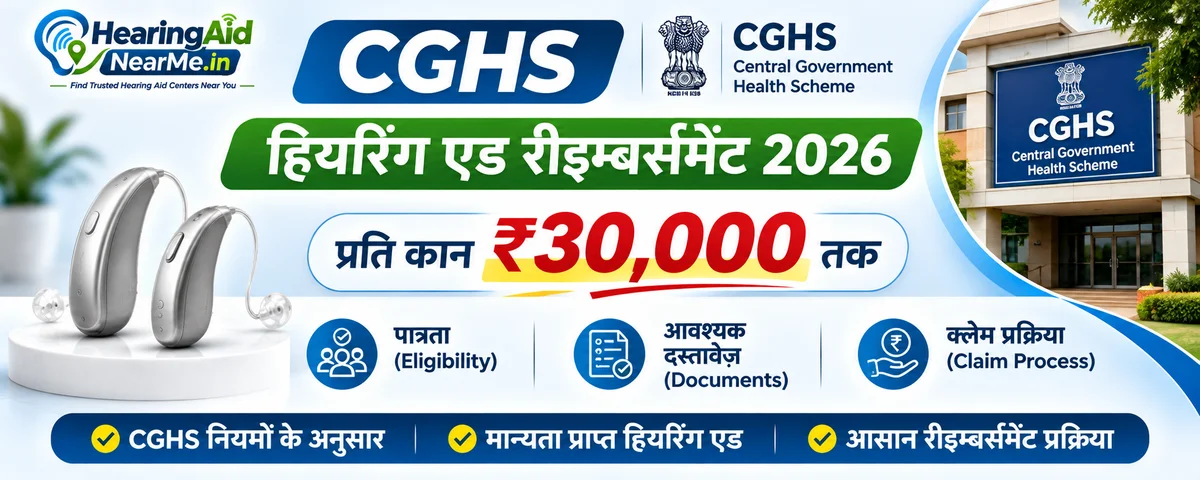
CGHS हियरिंग एड रीइम्बर्समेंट 2026: प्रति कान ₹30,000 तक, पात्रता, दस्तावेज़ और क्लेम प्रक्रिया

LISSUN Raises $2.5 Mn Pre-Series A Funding Led by RPSG Capital Ventures

Swastikka Hearing Solution: Best Hearing Aids Centre in Aundh, Pune
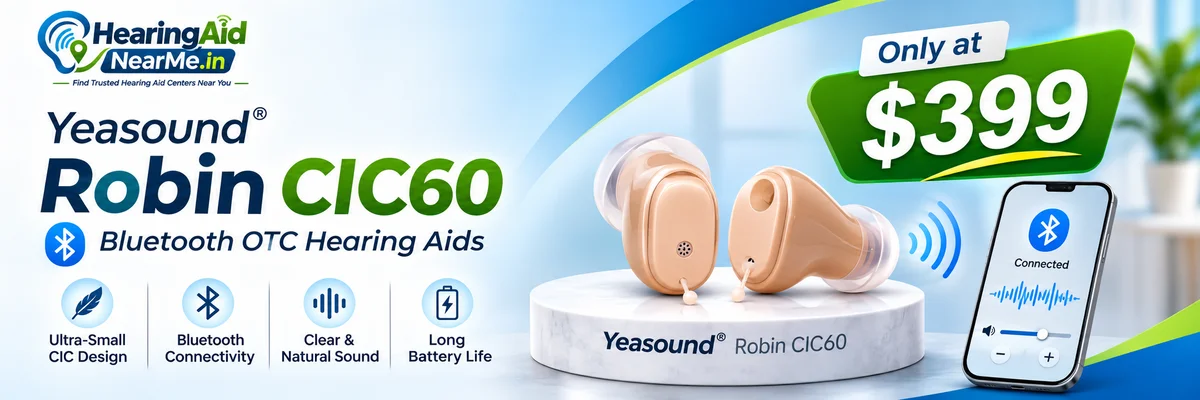
Yeasound Robin CIC60: $399 Bluetooth OTC Hearing Aids
Web Stories
More stories ›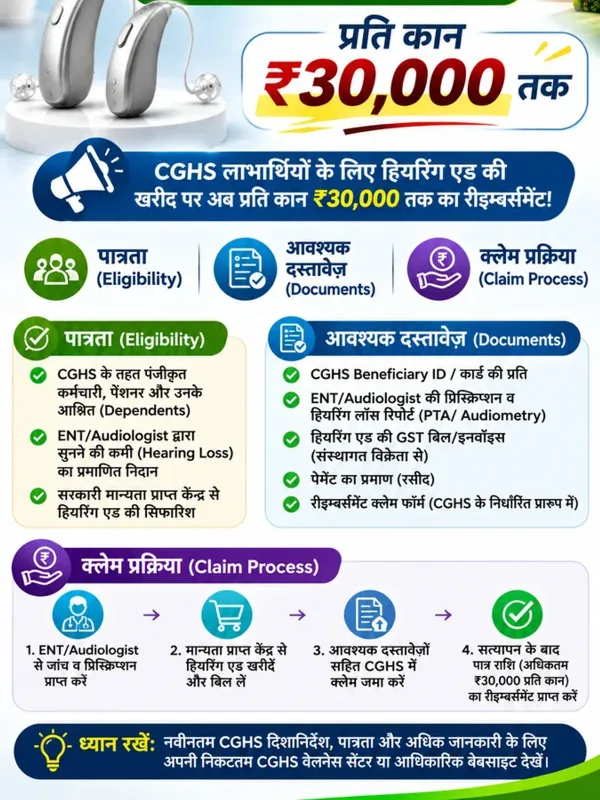 CGHS हियरिंग एड रीइम्बर्समेंट 2026: प्रति कान ₹30,000 तक, पात्रता, दस्तावेज़ और क्लेम प्रक्रिया
 Widex Allure AI RIC Explained: What On-Demand AI Hearing Aids Mean for Buyers in India
 Earkart US FDA Registration: What It Means for You
 आजी-आजोबांसाठी कोणती आरोग्य मशीन? मार्गदर्शन
 ब्रेकिंग न्यूज: श्रवणयंत्रावर 50% सूट | व्हिआर स्पीच अँड हिअरिंग क्लिनिक, अहिल्यानगर
 Hearing Aids November 2026: Latest Updates & Price Guide
 Oticon Hearing Aids Discontinued in India: Full List 2026
 Siemens Hearing Aid Guide 2026: Features, Prices, Benefits
 Phonak Hearing Aid Latest Update 2026: New EON Series, Features, Price and Availability
 Signia Hearing Aid Latest Update 2026: New MaX AI Hearing Aid, Features and Prices
Reader Comments
Comments are reviewed by our desk before they appear. Sign in with your mobile number to join the discussion.