Best Hearing Aids for Profound Hearing Loss
Compare the best hearing aids for profound hearing loss, from power BTE styles to costs, and find hearing aids near me for an expert fitting.

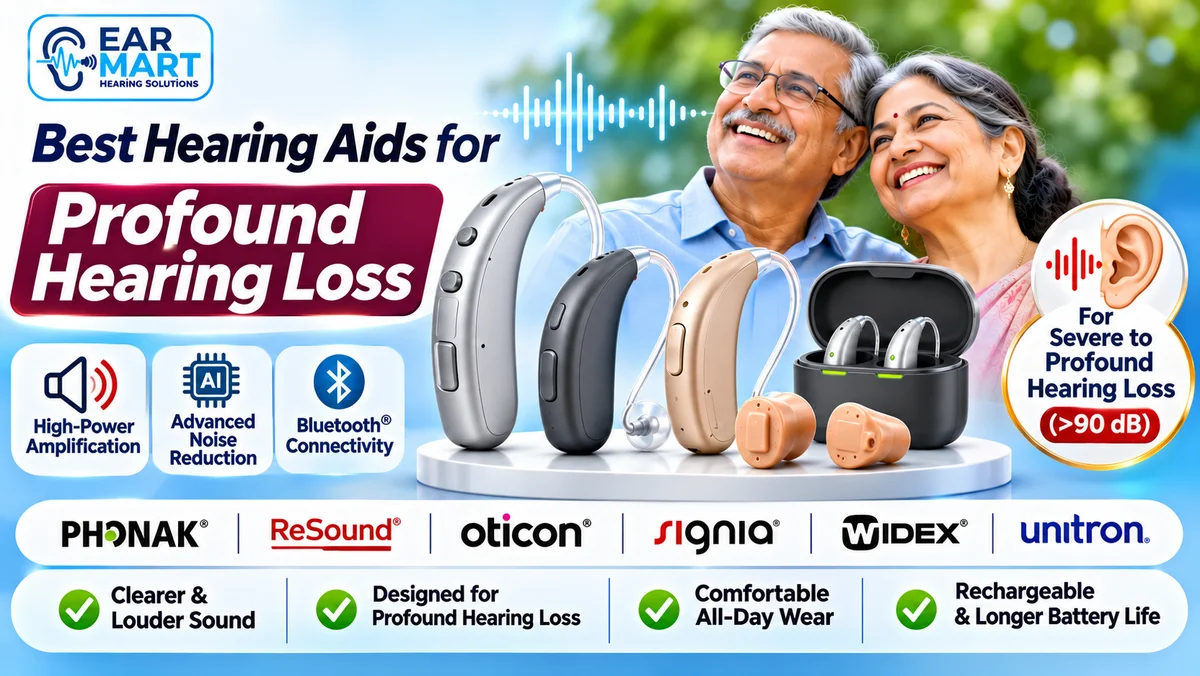
- Profound hearing loss needs prescription high-power or super-power hearing aids, not basic or over-the-counter devices.
- Behind-the-ear (BTE) styles are usually recommended because they hold more power, bigger batteries and secure custom earmolds.
- Our top pick is the Signia Motion Charge&Go SP BTE for strong amplification, speech clarity and comfort.
- Look for powerful sound without distortion, strong feedback control, speech clarity in noise and a secure fit.
- Expect to pay roughly $3,000 to $8,000 per pair, depending on technology level, features and services.
- Professional fitting and follow-up adjustments matter as much as the device itself.
Profound hearing loss is the most significant level of hearing loss. Everyday speech, phone calls and environmental sounds can be very hard or impossible to hear without help. The good news is that modern hearing technology can make a real difference. This guide covers which hearing aids work best for profound hearing loss, what features to look for, what they cost, and how to find hearing aids near me with expert support.
Why Profound Hearing Loss Needs Powerful Hearing Aids
Small, discreet hearing aids work well for mild to moderate hearing loss, but they don’t have room for the large batteries, strong amplifiers and feedback control that profound hearing loss demands. That is why larger, high-power designs are the standard choice here.
Over-the-counter hearing aids are preprogrammed for milder levels of loss and aren’t strong enough. Profound hearing loss calls for prescription devices that a hearing specialist programs to your hearing test results. The goal is maximum usable volume without discomfort, whistling or distorted sound. In some cases, cochlear implants may also be recommended.
Top 5 Hearing Aids for Profound Hearing Loss
Power matters, but so do clarity, comfort, battery life and professional programming. The best choice depends on your hearing test and your daily lifestyle. Here are five high-power options to consider.
Signia Motion Charge&Go SP BTE: Best overall. Built for severe to profound hearing loss, it combines strong amplification with speech clarity and background noise reduction. The rechargeable battery and comfortable behind-the-ear design suit all-day wear.
Rexton M-Core B-Li HP: Best for rugged, rechargeable performance. Motion sensors help it adapt to your surroundings automatically. A long-lasting rechargeable battery, durable build and Bluetooth connectivity make it a dependable daily companion.
Phonak Naída Lumity (Naída L90-UP): Best for noisy environments. Dual-microphone technology helps speech stand out in busy places, while powerful amplification and smooth connectivity support conversations, calls and media.
Widex Allure BTE: Best for natural sound. It pairs power with advanced processing designed to avoid a robotic, over-processed sound. Your audiologist can fine-tune it for high volume while keeping sound rich and lifelike.
Oticon Xceed: Best for sound awareness. Its 360-degree approach helps you follow several speakers and stay aware of your surroundings, with strong amplification and feedback prevention for those who need high power.
Quick Comparison
Signia Motion C&G SP BTE: overall performance and premium speech clarity
Rexton M-Core B-Li HP: rugged, rechargeable everyday performance
Phonak Naída Lumity L90-UP: challenging listening situations
Widex Allure BTE: natural, comfortable sound quality
Oticon Xceed: speech understanding and environmental awareness
What to Look for in Hearing Aids for Profound Hearing Loss
Powerful amplification without distortion. Strong sound is useless if it is harsh or uncomfortable, so choose a device that stays clear at high volume.
Strong feedback management. High power can cause whistling, so look for technology that detects and stops feedback quickly.
Speech clarity in noise. Speech enhancement and noise reduction help you stay in the conversation in restaurants, meetings and family gatherings.
Comfortable, secure fit. A hearing aid you enjoy wearing is one you will actually use. Custom earmolds help with both comfort and sound quality.
Rechargeable battery and reliable battery life. Nightly charging removes the hassle of tiny disposable batteries.
Connectivity and accessories. Direct streaming from phones and TVs, remote microphones, TV adapters and hearing loops can fill in the gaps in difficult listening situations.
Professional fitting and ongoing adjustments. Expert programming and follow-up visits make the biggest difference in your results.
How Much Do Hearing Aids for Profound Hearing Loss Cost?
Prices for high-power hearing aids typically run from about $3,000 to $8,000 per pair. The cost depends on the technology level, features such as Bluetooth, rechargeability and speech enhancement, the brand and style, warranty coverage, and the professional services included.
A higher technology level often delivers better sound quality and noise control. With proper care, hearing aids can last five years or more, so it helps to think of them as a long-term investment in your health. Insurance benefits, financing and payment plans may help make them more affordable.
Why Professional Fitting Matters
Profound hearing loss is an ongoing journey, not a one-time purchase. A hearing specialist programs your devices to your hearing profile, reduces feedback, improves comfort and fine-tunes sound quality. Follow-up visits let you adjust as you get used to your hearing aids, and your needs may change over time.
How to Find Hearing Aids Near Me
Book a professional hearing screening. It confirms the level and type of your hearing loss. Your audiogram shows which sound frequencies you are missing.
Get recommendations based on your results. Specialists consider your audiogram, speech understanding, ear shape, lifestyle, comfort and budget.
Try high-power options with expert support. Compare trusted brands, test different styles and get hands-on demonstrations in a hearing center close to you.
Searching for hearing aids near me is a simple first step. Look for a local clinic that offers screenings, device demos, a range of high-power brands and long-term follow-up care.
Conclusion
Profound hearing loss doesn’t have to keep you from the conversations and moments you love. With a high-power prescription hearing aid, a proper fitting and ongoing support, clearer communication is possible. Book a hearing screening at a hearing center near you and take the first step toward hearing better.
FAQs
Can hearing aids help with profound hearing loss?
Yes. Prescription high-power hearing aids with strong amplification, speech enhancement and feedback management can help people with profound hearing loss hear speech and everyday sounds more clearly.
Are BTE hearing aids better for profound hearing loss?
In most cases, yes. BTE hearing aids are larger than in-the-ear styles, so they can hold more power, bigger batteries and advanced features.
How much do hearing aids for profound hearing loss cost?
Typically about $3,000 to $8,000 per pair, depending on technology level, brand, style and features. Insurance benefits and financing may lower your out-of-pocket cost.
Are OTC hearing aids strong enough for profound hearing loss?
No. Over-the-counter hearing aids are designed for mild to moderate hearing loss and don’t provide enough power for profound loss.
Do people with profound hearing loss need cochlear implants instead of hearing aids?
Some do. If hearing aids no longer give you enough speech clarity, ask your hearing specialist whether a cochlear implant evaluation is the right next step.
Why is professional fitting important for profound hearing loss?
Because the device must be programmed to your exact hearing needs. A specialist ensures a secure, comfortable fit, reduces feedback and adjusts settings over time.
How do I find hearing aids near me?
Search for a local hearing center by city or zip code, and choose one offering hearing screenings, demonstrations of high-power models and ongoing follow-up care.
More from this section
Hearing Aids November 2026: Latest Updates & Price Guide
स्टारकी हिअरिंग एड किंमत 2027 | ज्येष्ठ नागरिकांसाठी सर्वोत्तम मॉडेल
रीसाउंड श्रवणयंत्र किंमत भारत 2026: ज्येष्ठ नागरिकांसाठी सर्वोत्तम मॉडेल्स
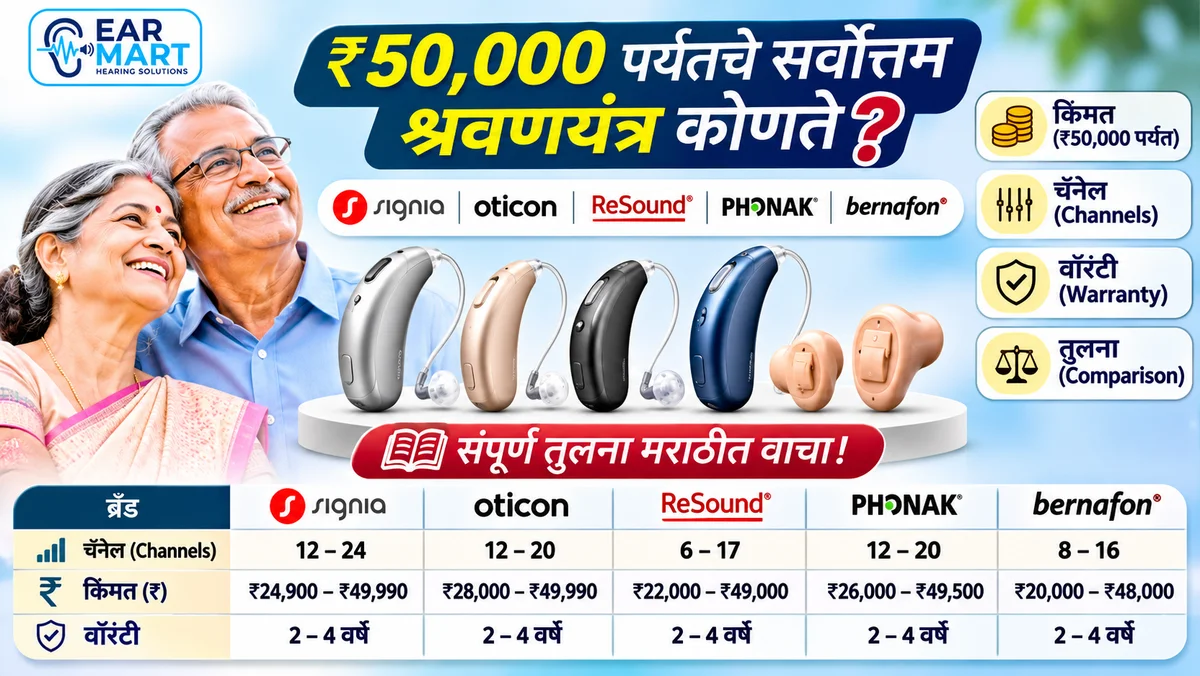
₹50,000 च्या आत सर्वोत्तम श्रवणयंत्र 2026: सर्व ब्रँडची तुलना, किंमत आणि माहिती
Web Stories
More stories › आजी-आजोबांसाठी कोणती आरोग्य मशीन? मार्गदर्शन
 ब्रेकिंग न्यूज: श्रवणयंत्रावर 50% सूट | व्हिआर स्पीच अँड हिअरिंग क्लिनिक, अहिल्यानगर
 Hearing Aids November 2026: Latest Updates & Price Guide
 Siemens Hearing Aid Guide 2026: Features, Prices, Benefits
 Phonak Hearing Aid Latest Update 2026: New EON Series, Features, Price and Availability
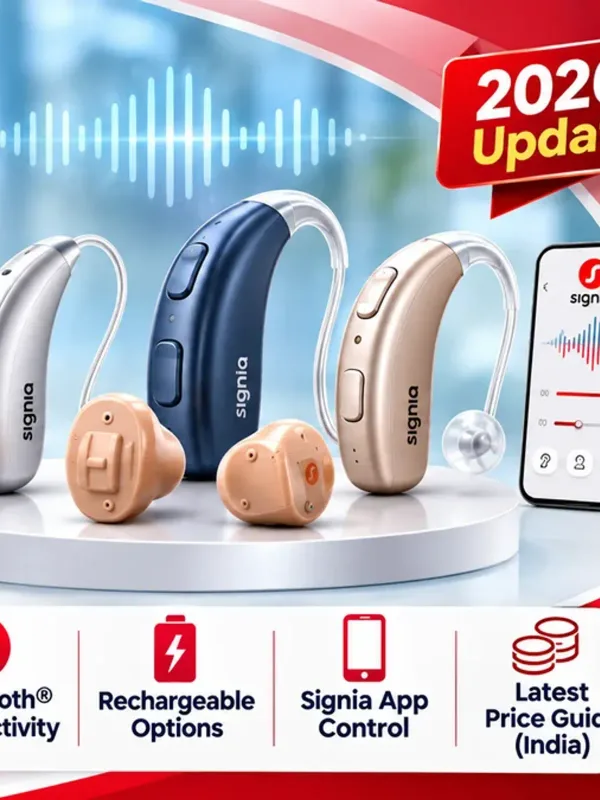 Signia Hearing Aid Latest Update 2026: New MaX AI Hearing Aid, Features and Prices
 Widex Hearing Aid Latest Update 2026: Allure AI & Price
 Oticon Reveal 2026: Dual AI hearing aid, features and price
Reader Comments
Comments are reviewed by our desk before they appear. Sign in with your mobile number to join the discussion.